Kapiti Island Bird Watching Tour: Species On The Island Trip
Kapiti Island is a predator-free DOC nature reserve, and DOC calls it one of the largest accessible island bird sanctuaries in New Zealand. Here is what that means in bird species, which trip suits a bird watcher, and how the rules protect what you came to see.
Short answer
Kapiti Island is a predator-free DOC nature reserve 5 km off the Kapiti Coast, home to species DOC names including little spotted kiwi, takahe, kokako, hihi, saddleback and kaka. The 5-hour day tour costs from $186.78 per person; the overnight, from $401.73 per person for 2 days.
Kapiti Island sits 5 km off the west coast of the lower North Island, roughly an hour north of Wellington by road, and DOC describes it as one of the largest accessible island bird sanctuaries in New Zealand. Reserved as a bird sanctuary in 1897, the island was cleared of kiore and Norway rats by aerial drop in September and October 1996, and it now carries birds that have vanished from most of the mainland. Only approved operators may land visitors, and DOC lists one concessionaire for the job. Spotting the island's famously shy kiwi usually means staying overnight, and the guide to seeing kiwi birds in New Zealand explains how the Kapiti night walk compares with the Zealandia and Nga Manu alternatives.
That single fact shapes everything on this page. One operator, Kapiti Island Nature Tours, runs the three island trips covered here: the 5-hour classic guided day tour from $186.78 per person, the Wellington-return day tour from $305 per person, and the 2-day overnight experience from $401.73 per person for 2 days. The birds, the tracks and the biosecurity rules are the same whichever trip you choose, so this guide works through the species first, then matches each trip to the kind of bird watching you want.
What Birds Live On Kapiti Island?
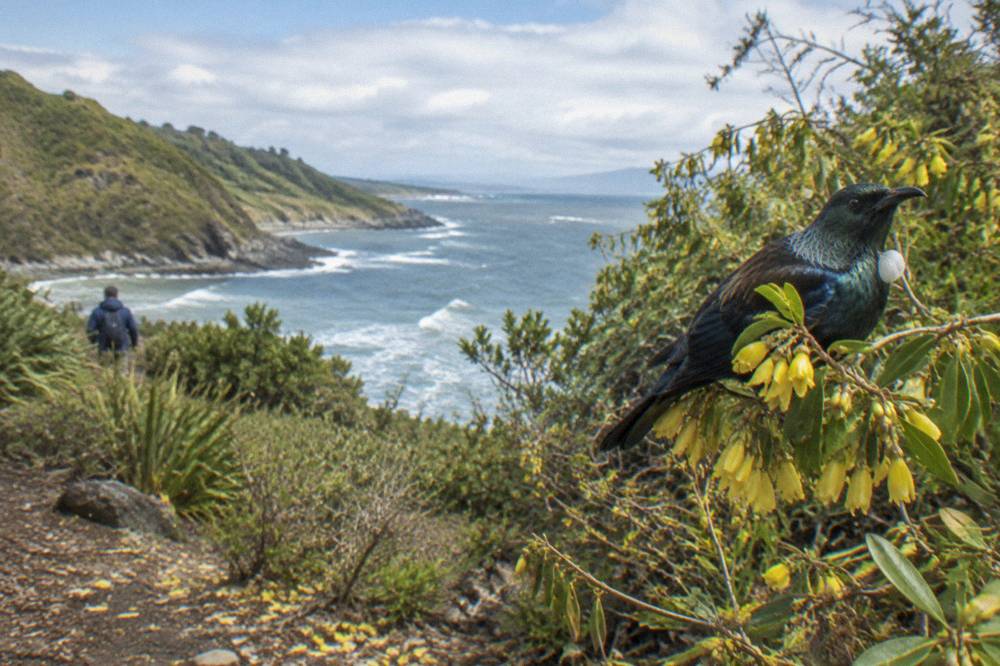
DOC names hihi, kokako, takahe, brown teal and saddleback as species transferred to Kapiti Island since the 1980s, alongside resident kereru, kaka, tui, bellbird, weka, North Island robin, North Island tomtit, whitehead, fantail, silvereye and the summer-only long-tailed cuckoo. The wild kiwi are little spotted kiwi, a species extinct on the mainland. No sighting is ever guaranteed, and no tour promises one.
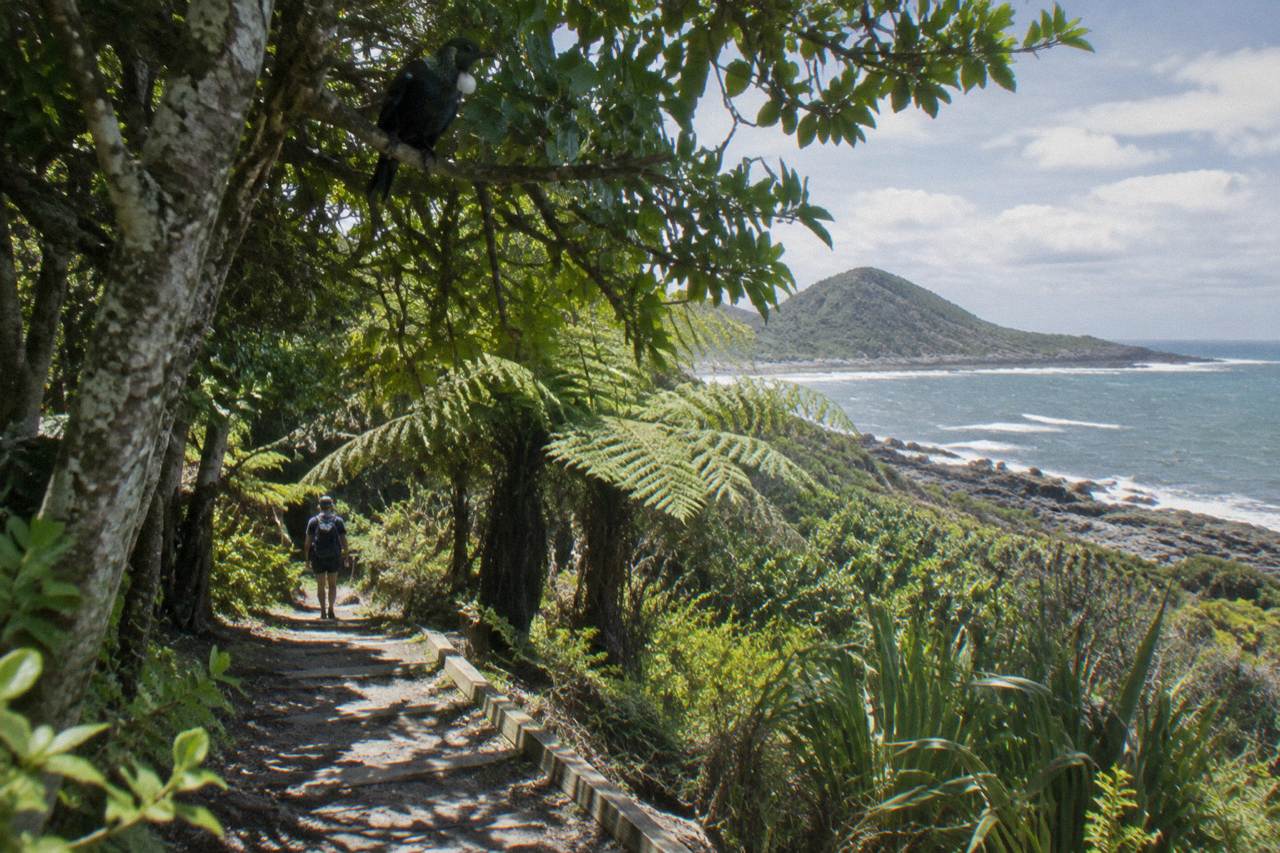
The island's bird list reads like a conservation roll call because that is exactly what it is. Hihi, kokako, takahe, brown teal and saddleback were all transferred to the island under DOC programmes that began in the 1980s. Around them live the widespread natives: kereru clattering through the canopy, tui and bellbird working the flowering trees, and whitehead flocks moving through the understorey. The North Island robin and tomtit hold territories through the forest interior.
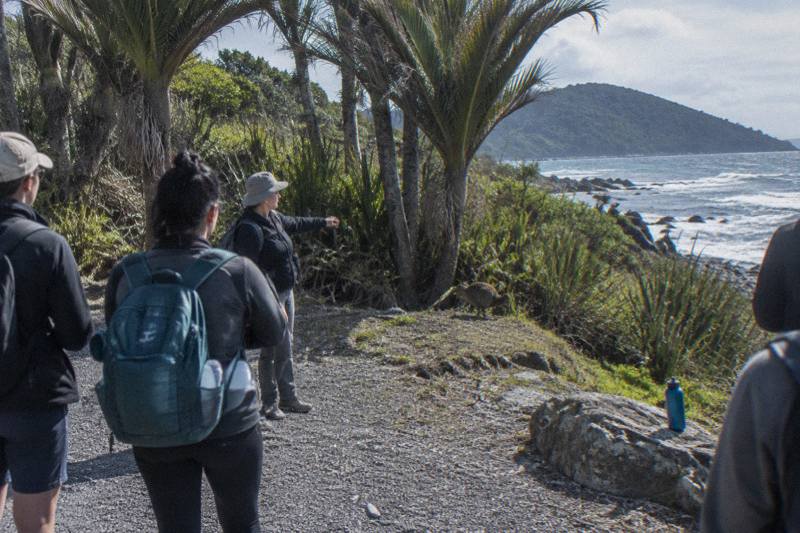
The North Island kaka deserves a special mention for anyone packing food. DOC warns that kaka and weka are inquisitive and expert at getting into bags, and advises keeping belongings out of reach. A weka will investigate a daypack left on a bench with the confidence of an animal that has never met a predator, because on this island it never has.
The coast and the boat ride add their own cast. DOC names gulls, white-fronted terns, variable oystercatchers, reef herons and shags along the shoreline, and gannets, fluttering shearwaters and little blue penguins as birds often seen from the boat. At Okupe Lagoon in the island's north end, scaup, grey and brown teal, black swans and royal spoonbills gather. Orca, seals and korora appear on the crossing, in DOC's words, only "if you're really lucky".
How those species sort across the island is easiest to see in a table:
| Where | Species DOC names for that spot |
|---|---|
| Forest tracks (both public areas) | Takahe, kokako, hihi, saddleback, kereru, kaka, tui, bellbird, weka, robin, tomtit, whitehead, fantail, silvereye, long-tailed cuckoo in summer |
| Coastline | Gulls, white-fronted tern, variable oystercatcher, reef heron, shags |
| Okupe Lagoon, North End | Scaup, grey teal, brown teal, black swans, royal spoonbills |
| From the boat | Gannets, fluttering shearwaters, little blue penguins, and orca or seals "if you're really lucky" |
| After dark | Little spotted kiwi, ruru, korora |
DOC says saddlebacks, stitchbirds and takahe are often seen, which is about as far as any honest source goes. Treat every species as possible, none as certain, and you will enjoy the day far more than a visitor armed with a checklist and a deadline.
Which Kapiti Island Tour Suits A Bird Watcher Best?
The 5-hour classic guided day tour, from $186.78 per person with lunch included and rated 4.8 across 576 reviews, is the strongest bird watching choice for most visitors: a guided nature walk, a fixed half-day and the ferry from Paraparaumu Beach. The overnight adds a guided night walk for ruru, korora and kiwi pukupuku, from $401.73 per person for 2 days.
The day tour starts at Paraparaumu Beach, with check-in at the operator office on Marine Parade, and begins with an 08:45 departure and an introductory talk before a guided nature and history walk of about 1 hour, then lunch at the lodge. The walk's guided format matters for bird watchers: a guide who knows the territories points out species a first-time visitor would walk straight past. Hotel pickup is not part of this trip, so you make your own way to the beach, roughly an hour north of Wellington.
The Wellington-return day tour, from $305 per person, suits a bird watcher staying in the capital without a car. A shuttle from Wellington accommodation to Paraparaumu Beach is part of the 6-hour trip, which includes a cooked lunch and the same guided day on the island.
If birds are the whole point of the trip, the choice really comes down to daylight or darkness. Daylight bird watching on Kapiti is about the forest species.. The after-dark shift belongs to the overnight experience, whose guided night walk looks for ruru, korora and kiwi pukupuku. No operator can promise a kiwi, and this one says plainly that it cannot guarantee a kiwi sighting.
If your interest is a general introduction to New Zealand native birds and the island price or the ferry logistics feel heavy, the Zealandia day tour in Wellington, from $40.23 per person, is the lighter alternative, and the Kapiti Island tours compared page works through that trade in detail.
Where On Kapiti Island Do The Birds Gather?
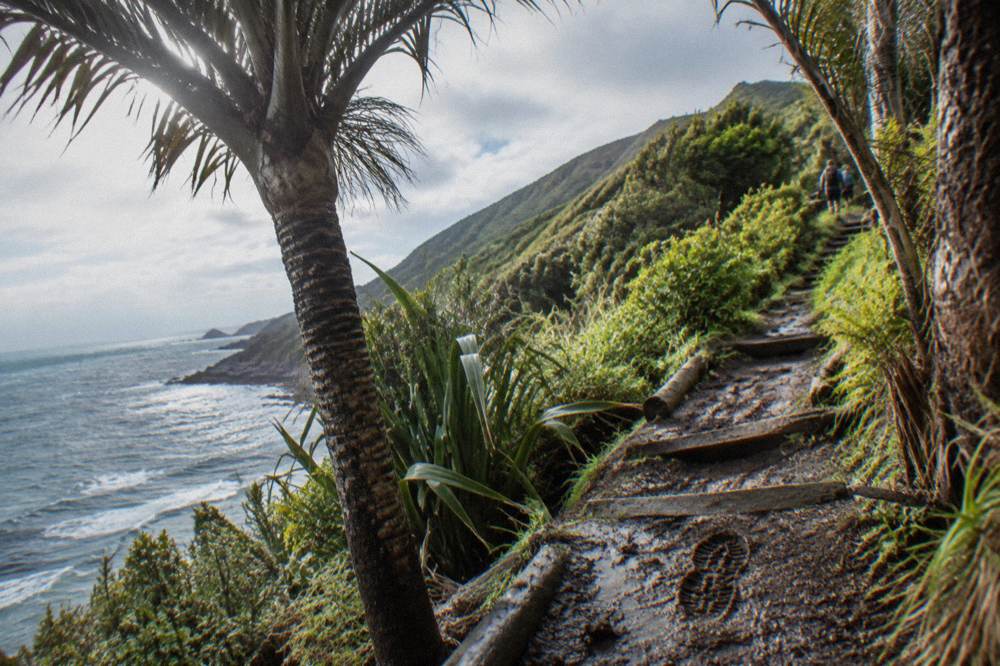
Kapiti Island has two public areas, Rangatira halfway along the eastern shore and the North End, and DOC's track network serves both: the Rangatira Loop of 1.8 km and 1 hour 30 minutes, the Wilkinson Track to the 521 m summit, and the gentle 4.8 km Okupe Valley Loop at the North End. Birds spread across all of them.
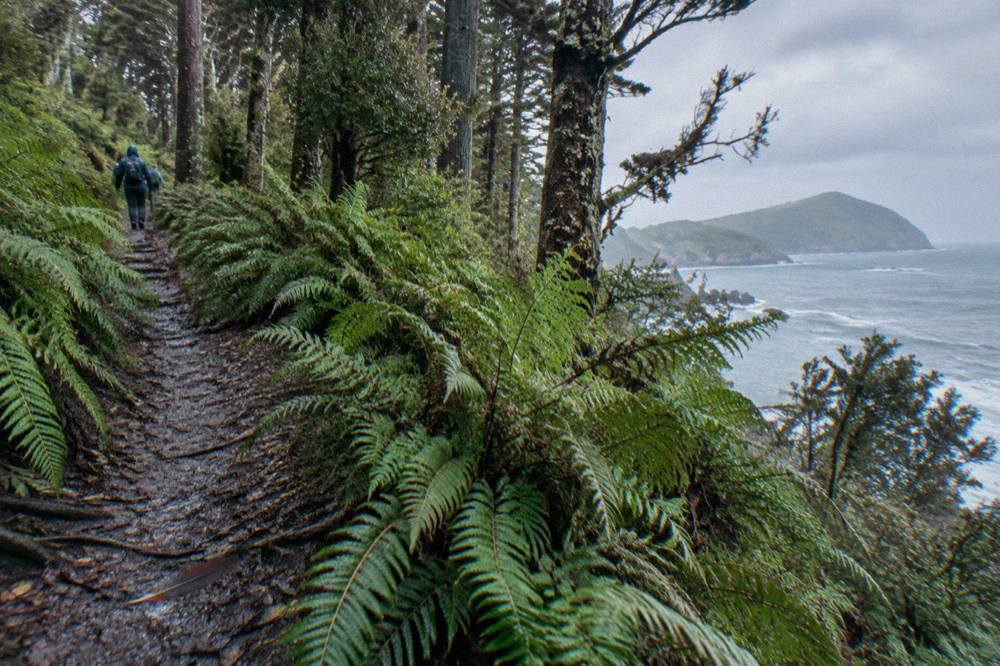
At Rangatira, the loop track passes whaling trypots, a historic whare and a wetland boardwalk, and DOC times it at 1 hour 30 minutes for its 1.8 km. The Wilkinson Track runs 3.8 km one way, about 2 hours, to the summit at Tuteremoana, with a picnic area and hihi feeding station a third of the way up. The Trig Track, 2 km and 2 hours, is steeper and uphill only. Takahe and weka keep to the flats; the forest interior along the tracks carries robin, tomtit, whitehead and kokako.
| Track | Area | Length | DOC time | Notes |
|---|---|---|---|---|
| Rangatira Loop | Rangatira | 1.8 km loop | 1 hour 30 minutes | Trypots, historic whare, wetland boardwalk |
| Wilkinson Track | Rangatira | 3.8 km one way | 2 hours | To Tuteremoana summit, hihi feeding station |
| Trig Track | Rangatira | 2 km one way | 2 hours | Steeper, uphill direction only |
| Okupe Valley Loop | North End | 4.8 km loop | 1 hour 30 minutes | Gentle, 198 m lookout over Okupe Lagoon |
| Boulder Bank Loop | North End | 2 km loop | 45 minutes | Closed October to March for nesting seabirds |
The Okupe Valley Loop at the North End is the waterfowl walk: a gentle gradient to a lookout above the western cliffs with views over Okupe Lagoon, where scaup, teal, black swans and royal spoonbills gather. Note the Boulder Bank Loop's closure from October to March for nesting seabirds, which bites squarely into the high season. Facilities differ too: Rangatira has toilets, a public shelter and fresh drinking water, while Waiorua has toilets and a shelter but no drinking water, and DOC advises all island water is untreated, so bring your own.
The island is not wheelchair accessible and the tracks are unpaved, with a stony-beach landing by ramp, so reasonable fitness and proper shoes are part of the planning. It is not currently possible to walk from Rangatira to Waiorua. The Kapiti Island walks guide covers the track choices in full.
How Does The Kapiti Island Night Walk For Kiwi Work?
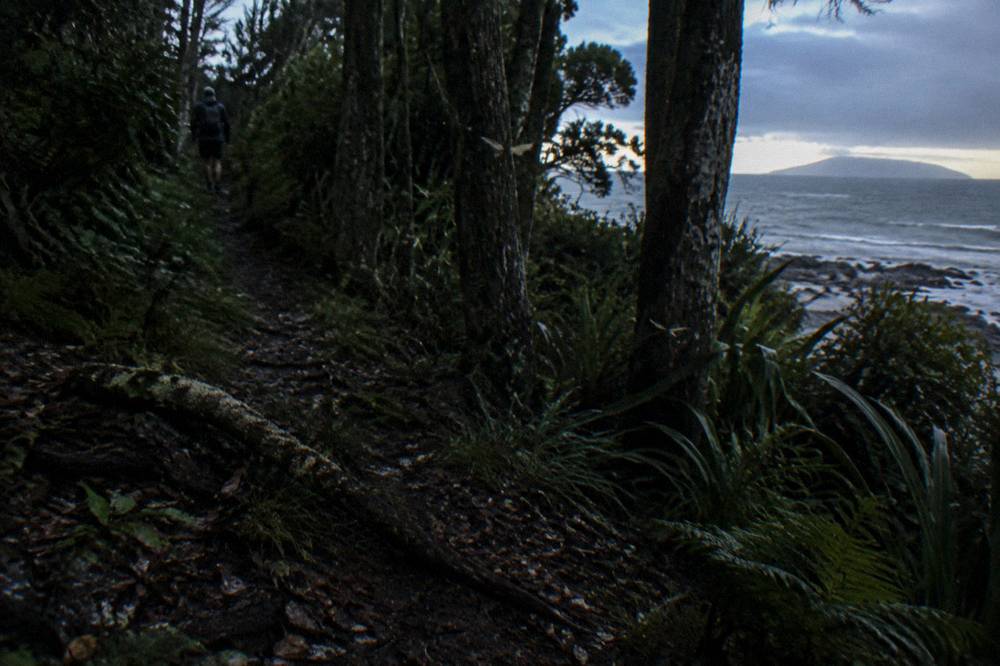
The overnight experience's guided night walk looks for ruru, korora and kiwi pukupuku, the little spotted kiwi extinct on the mainland. The operator states plainly that it cannot guarantee a kiwi sighting. The stay is on the operator's private land at Waiorua Bay, never inside the DOC reserve, where overnight stays are not permitted.
The overnight trip, rated 4.9 across 484 reviews and priced from $401.73 per person for 2 days, includes the return ferry, the DOC permit, meals of dinner, breakfast and two lunches, and accommodation at Waiorua in a cabin, tent or ensuite, each with its own rate. Group size caps at 18. The night walk is the bird watching centrepiece, and the operator's preparation advice is practical: quiet clothing, because nylon and jandals can disturb kiwi, and a torch mindset of patience rather than pursuit. Cabins and tents have solar lights and no power supply.
Hearing a kiwi in the dark still counts as an encounter.. The walk also looks for ruru and korora, with the same no-guarantee caveat. The walk itself is guided, so you are not stumbling around an unfamiliar island alone.
- Zealandia Tours$40.23
- Kapiti Coast Nature Tours$56.90
- Wellington Seal Coast Tours$112.07
- Kapiti Island Tours$186.78
Free cancellation up to 24 hours before the start applies to this trip, with a full refund, and it needs good weather: a weather cancellation gets you another date or a full refund. The operator season runs 1 September to 30 June, with the lodge closed between Christmas and New Year while the ferry runs day trips only. The Kapiti Island overnight stay guide unpacks the accommodation tiers.
Can You Actually See Kiwi On Kapiti Island?
Kapiti Island carries wild little spotted kiwi, a species extinct on the mainland, and the overnight trip walks for them after dark. But no tour here promises a sighting, and the operator itself says it cannot guarantee a kiwi. DOC and the operator also disagree on the island's kiwi numbers, so no count appears on this page.
That honesty is worth pausing on, because the internet is full of implied guarantees. A wild kiwi on a predator-free island behaves like a wild kiwi: it forages at night, it hears you long before you hear it, and the quality of the encounter depends on wind, moon, luck and how quietly your group moves. What the island does guarantee is habitat, and 1,965 ha of it, free of introduced mammals, the outcome of eradication work that included the rat eradication of September and October 1996, the reason these birds survive here at all.
The can you see kiwi on Kapiti Island post works through the odds in more detail.
What About Zealandia Or Nga Manu For Bird Watching?
The Zealandia day tour, from $40.23 per person, is a guided 2-hour walk in a Wellington sanctuary, rated 4.8 across 248 reviews. The Nga Manu Kiwi Night Encounter, from $56.90 per person for 1 hour 30 minutes, offers an escorted dusk viewing of a resident pair of North Island brown kiwi in Waikanae. Both are mainland alternatives to the island trip. For a look inside the sanctuary after dark, the guide to the Zealandia night tour in Wellington explains what the guided walk involves and how it stacks up against the twilight option.
Zealandia, reached at its visitor centre in Karori, records more than 40 native bird species, 24 of them endemic, on a site open every day except Christmas Day with the sanctuary running 9 am to 5 pm and last entry at 4 pm. The small-group day tour caps at 12, includes a guide, and unlike the island trips the booking page says it operates in all weather conditions, so dress for it. It is the cheapest tour on this site and the easiest bird walk from central Wellington, a fair comparison the Kapiti Island or Zealandia tour page makes in detail.
Nga Manu Nature Reserve is a different proposition: a 14 ha remnant of coastal lowland swamp forest at Waikanae, run by the Nga Manu Trust since 1974 and open to the public since 1981. The night encounter meets at the reserve visitor centre, so plan your own travel. Guests get an informational session and are then escorted to the kiwi habitat at dusk in a Thursday to Sunday window, in groups capped at 10, with no photography.
The trade is straightforward. The island trips give you a wild, predator-free island and a boat crossing; Zealandia gives you an accessible sanctuary in Karori; Nga Manu offers an escorted dusk viewing of a resident pair in a habitat rather than the chance of a wild one. A serious bird watcher with time does the island and one of the mainland sites, and the day tours from Wellington covered in the day tours from Wellington guide combine well.
What Rules Protect The Kapiti Island Birds?
DOC's island rules exist because one stowaway mouse could undo decades of conservation. Bags are inspected and unpacked before boarding, food must be in sealed containers, visitors keep 10 m from wildlife, keep to formed tracks, pack out all rubbish including fruit pips and cores, and take nothing off the island. No pets, no drones without a permit, no feeding wildlife.
The biosecurity screening at check-in is not theatre. The operator asks that footwear and ground-contact gear be cleaned within 48 hours of sailing, and a biosecurity team screens bags at check-in. Open bags of food are not allowed on board, and every item of clothing, footwear and luggage is checked for pests, soil, seeds and plant material. Kapiti Island Nature Tours runs a DOC biosecurity check at its Marine Parade office before the boat departs from the Kapiti Boating Club at Paraparaumu Beach.
On the island itself, the rules are simple and worth knowing before you arrive, because weka and kaka will test your compliance for you.
| Rule | What it means on the day |
|---|---|
| Bag inspections | Bags are unpacked and inspected before boarding; check for pests, soil, seeds and plant material |
| Sealed food | Keep food in sealed containers; open bags of food are not allowed |
| 10 m from wildlife | Wildlife has right of way; do not approach or feed any animal |
| Formed tracks only | Stay on the tracks; pack out all rubbish including fruit pips and cores |
| Leave nothing, take nothing | No fires or portable cooking stoves, no smoking or vaping, nothing removed from the island |
| Gear hygiene | Clean footwear and ground-contact gear within 48 hours of sailing |
The surrounding sea is protected too. The Kapiti Marine Reserve, established in 1992, covers 2,167 ha in two areas between Paraparaumu and Waikanae beaches and the island, where no fishing of any kind is allowed, nothing may be taken or disturbed, and fish may not be fed. To snorkel from the island's shores you must travel there with a permit, and drone use near marine mammals needs authorisation.
What Should A Bird Watcher Bring On The Day?
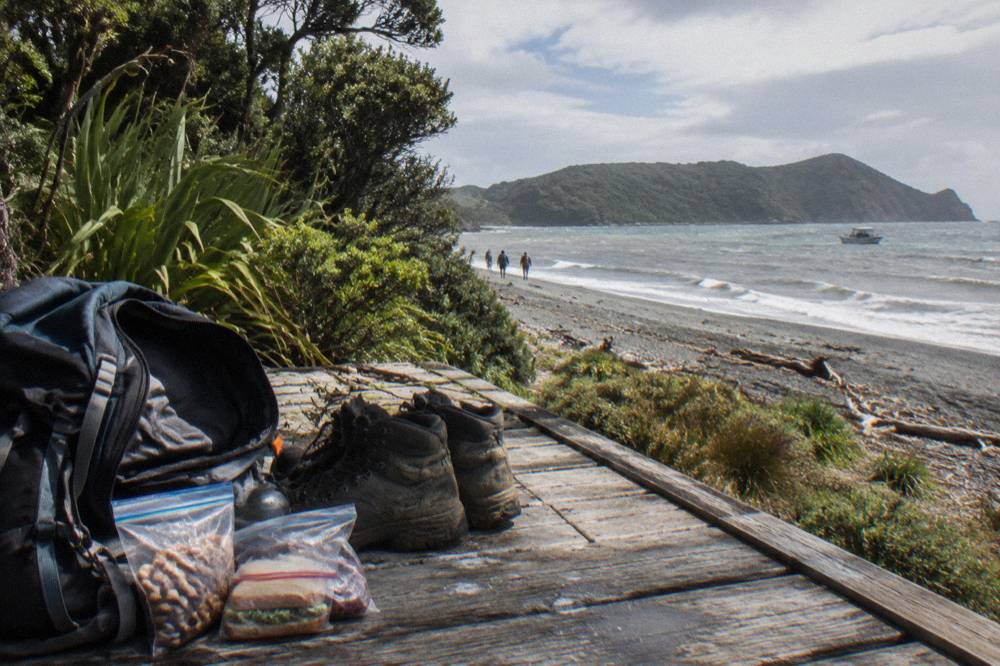
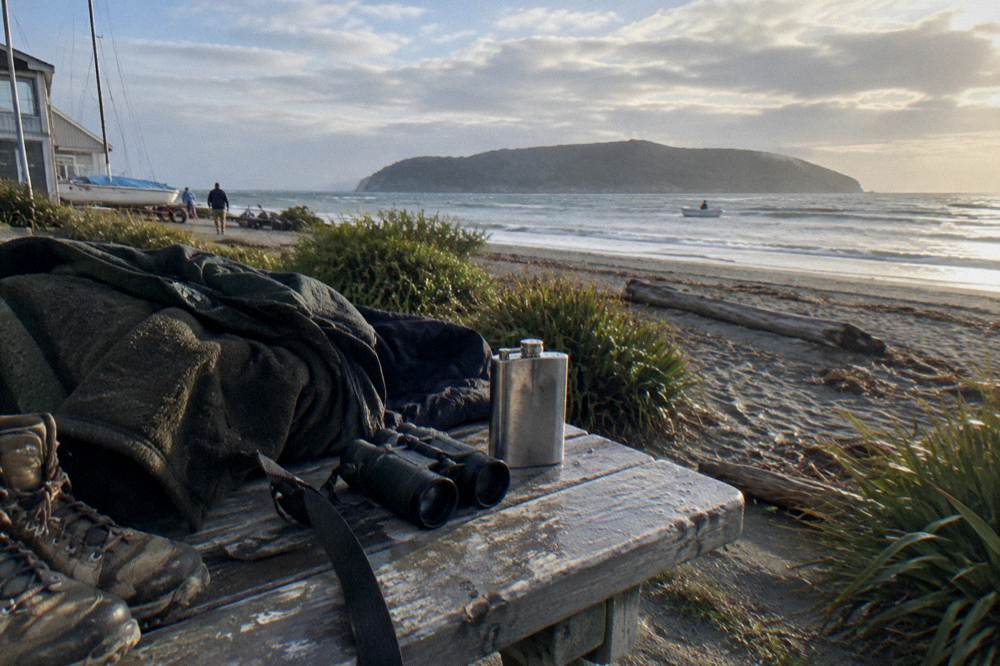
Bring binoculars, quiet layered clothing, sturdy shoes cleaned within 48 hours of sailing, sealed food containers, your own drinking water, and no expectations of any single species. The island has no shop and nowhere to buy food, all island water is untreated, and the tracks are unpaved, so reasonable fitness and proper preparation decide how good the day is.
The crossing takes about 15 to 20 minutes per the operator, over the Rauoterangi Channel, so sea conditions matter less than on a long boat trip, but a windproof layer pays off at the landing, which is a stony beach reached by ramp. Ferry departures fall in the morning and are confirmed at booking and by text the day before. Trips are weather dependent, and the skipper cancels for unsafe sea or weather with another date or a full refund; the day tour and overnight booking pages ask guests to phone between 7 and 7:15 am on the day to confirm the tour is going ahead.
On the food question, it depends on your trip. The classic day tour includes lunch at the lodge, the overnight includes dinner, breakfast and two lunches, and the Wellington-return day tour includes a cooked lunch. Beyond those meals, bring anything else you want in sealed containers. The what to bring on a Kapiti Island day trip guide carries the full packing list, and the best time to visit Kapiti Island on a tour guide covers the season, which runs 1 September to 30 June.
Every tour on this page carries free cancellation up to 24 hours before the start, with a full refund, stated on each individual booking page rather than as a blanket promise. Day trips and day tours on this site run from $40.23 to $305 per person, with the overnight at $401.73 per person for 2 days sitting apart, its rate changing with the accommodation tier you choose.
Common Questions About Kapiti Island Birds
What Birds Can You See On Kapiti Island?
DOC names takahe, kokako, hihi, saddleback, kaka, kereru, tui, bellbird, weka, North Island robin, tomtit, whitehead, fantail, silvereye and the summer long-tailed cuckoo in the forest, with gulls, terns, oystercatchers, reef herons and shags on the coast, and gannets, shearwaters and little blue penguins often seen from the boat. No sighting is guaranteed.
Can You See Kiwi On Kapiti Island?
The island carries wild little spotted kiwi, extinct on the mainland, and the overnight trip includes a guided night walk looking for them alongside ruru and korora. The operator says it cannot guarantee a kiwi sighting, so treat an encounter as a possibility rather than a promise.
Which Kapiti Island Tour Is Best For Bird Watching?
The 5-hour classic guided day tour, from $186.78 per person with lunch, rated 4.8 across 576 reviews, suits most bird watchers. The overnight experience, from $401.73 per person for 2 days, adds the guided night walk for kiwi, ruru and korora.
Do I Need Binoculars On A Kapiti Island Tour?
They help. Forest birds such as kaka, kereru and saddleback often sit at or above eye level in the canopy, and the wetland birds at Okupe Lagoon are best watched from distance. DOC asks visitors to keep 10 m from all wildlife, which is exactly the range binoculars close.
Why Can't Private Boats Land On Kapiti Island?
Kapiti Island is a DOC nature reserve and access is only through approved operators; private boats, kayaks, jetskis, paddleboards and swimmers may not land. DOC lists one concessionaire, Kapiti Island Nature Tours, which runs the ferry, guided walks and the overnight lodge on its private land at Waiorua Bay.
Is Zealandia Or Kapiti Island Better For Birds?
Zealandia, from $40.23 per person for a guided 2-hour walk, records more than 40 native bird species in a Wellington sanctuary. Kapiti Island, from $186.78 per person for the day tour, offers a wild predator-free island with a boat crossing.