Kapiti Island Marine Reserve: Boat Trip And Rules Around The Island
Every ferry to Kapiti Island crosses a protected marine reserve. Here is what the reserve covers, which boat trips cross it, and the rules that follow you onto the water.
Short answer
The Kapiti Marine Reserve was established in 1992 and covers 2,167 hectares in two protected areas between the Paraparaumu and Waikanae beaches and Kapiti Island. No fishing is allowed and nothing may be taken. The Kapiti Island boat trips from Paraparaumu Beach cross this water on their way to the island.
The Kapiti Marine Reserve sits between the mainland beaches and the island, and it changes what the crossing is: the sea you are on is managed for what lives in it, not around it. That shapes the boat trip, the rules you agree to when you board, and even what you can do when you step off on the island shore. This page covers the reserve itself, the trips that cross it, and the rules DOC asks every visitor to keep. The rules continue before you even step aboard, and the guide to Kapiti Island permits and landing on a tour explains the biosecurity check and what applies once you reach the shore.
What Is The Kapiti Island Marine Reserve?
The Kapiti Marine Reserve was established in 1992 and protects 2,167 hectares of sea in two separate areas lying between the Paraparaumu and Waikanae beaches and Kapiti Island. DOC manages it as a fully protected reserve: no fishing of any kind is permitted, and nothing may be taken or disturbed. The water the island ferries cross on their roughly 15 to 20 minute crossing is part of that protected zone.
Kapiti Island itself is a different kind of protection. It is a predator-free nature reserve, 1,965 hectares of forested hill country about 10 km long and 2 km wide, with its highest point, Tuteremoana, at 521 m. Together they make the crossing something more than transport. You are moving through two stacked protected zones, one above the waterline and one below it.
The reserve exists because this stretch of coast is where warm and cool currents meet, which supports an unusually rich mix of marine life. DOC names blue moki and kingfish in the reserve's waters, along with seals and dolphins. A dive spot known as Hole-in-the-Wall sits within the protected area. None of that is visible from the ferry deck on every trip, but it is the reason the water around the island is treated the way it is. The Department of Conservation's Kapiti Island pages cover both the island reserve and the marine reserve that surrounds the crossing.
The reserve sits about 30 km from Wellington city, close enough that the crossing fits inside a day trip yet far enough that the water feels removed from the harbour traffic. Boat launching inside the reserve is limited, DOC says, to the Waikanae and Kapiti Boating Clubs, and both are beach launches needing a four-wheel-drive vehicle. That constraint keeps private vessel numbers low and leaves the ferry as the practical way onto the water for almost everyone. The two protected areas, one to the west of the island and one to the east, wrap around the very channel the island boats use, so a seat on the ferry is a seat inside the protected zone.
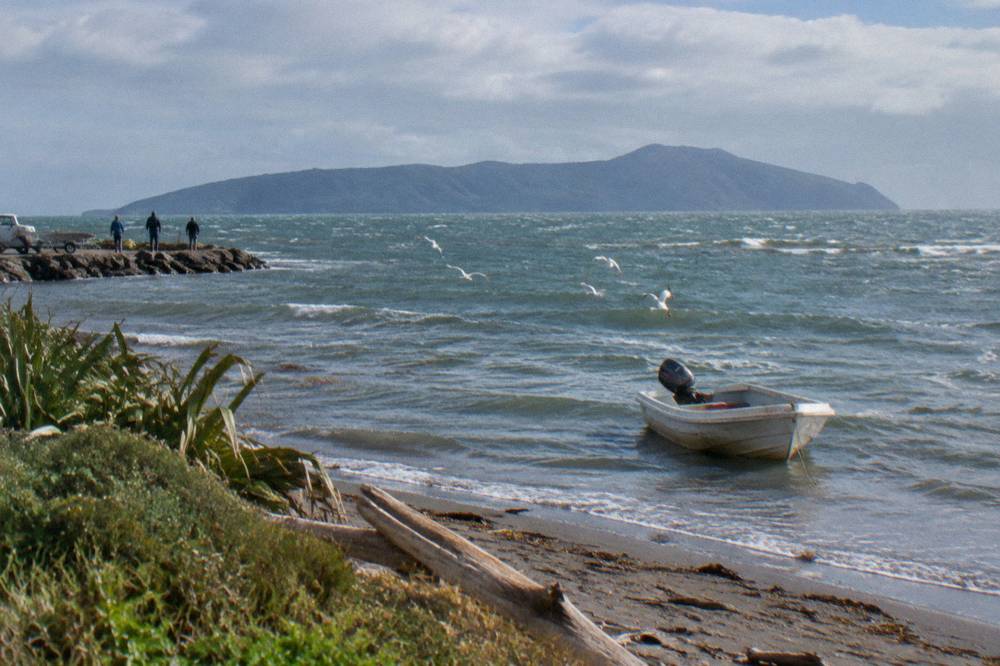
The two protected areas that make up the reserve sit on different sides of the island's connection to the mainland. Knowing where that line sits is part of planning any day around this coast, even if you never wet a line.
The reserve also has a history worth a sentence. Kapiti Island was reserved as a bird sanctuary in 1897, and DOC took stewardship in 1987; the marine reserve followed in 1992, closing the gap between protecting the island and protecting the sea it sits in. Land and sea are managed as one connected system, and the boat trip is the thread between them.
How Does A Kapiti Island Boat Trip Cross The Marine Reserve?
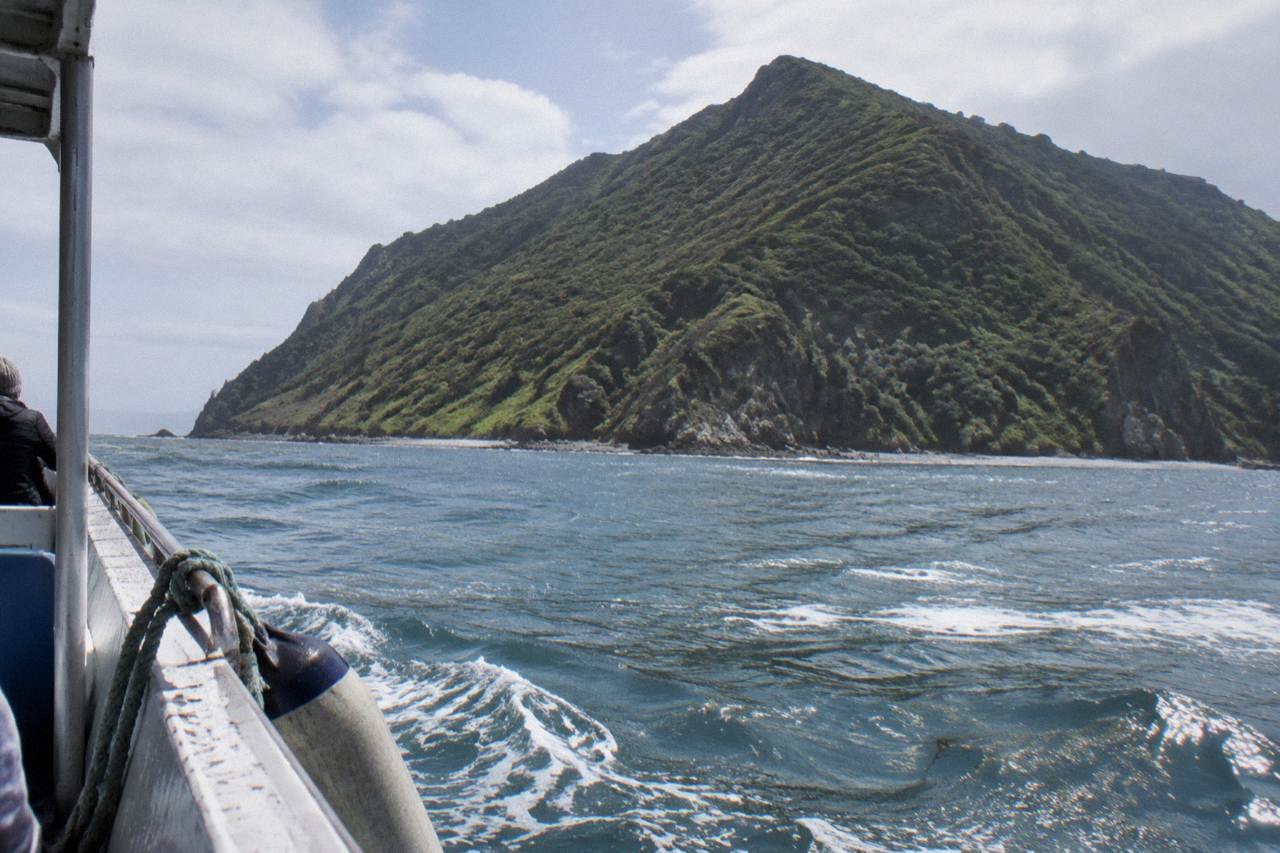
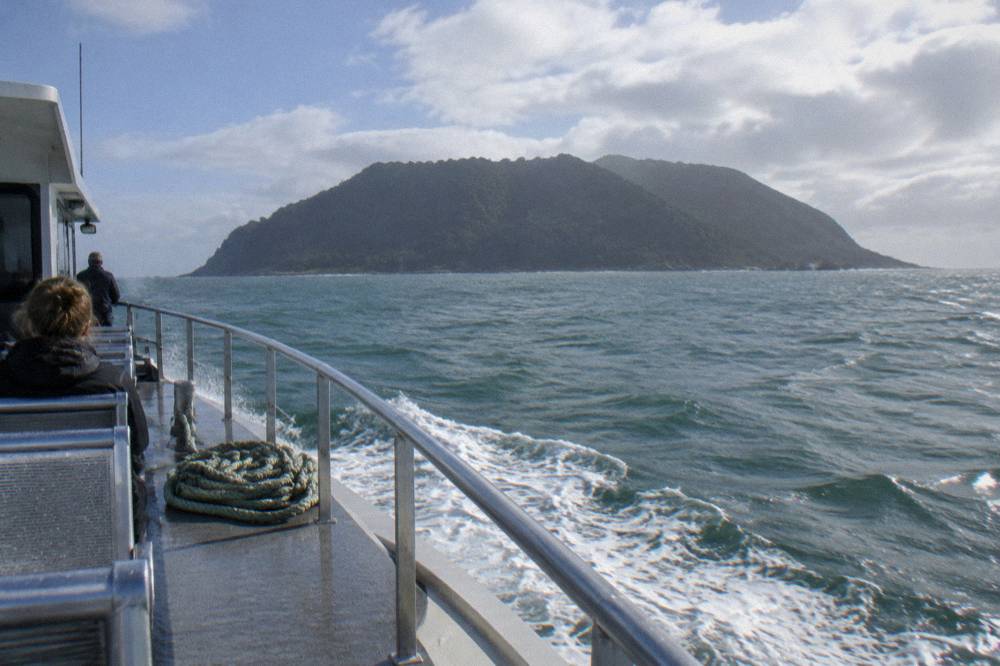
The island boats leave from the Kapiti Boating Club at Paraparaumu Beach and cross the Rauoterangi Channel to Kapiti Island in about 15 to 20 minutes, according to the operator. For the whole crossing the boat is inside or beside protected water. The DOC permit is included in these trips.
The operator for all three island trips on this site is Kapiti Island Nature Tours, the one concessionaire DOC lists for transport, guided walks, overnight kiwi spotting tours and lodge accommodation. Private boats, kayaks, jetskis, paddleboards and swimmers may not land on the island, so the ferry crossing is the sanctioned way through the reserve to shore. That single-operator structure is worth understanding before you book, because the three island products differ in start point and duration rather than in who runs them.
The classic day tour is the most reviewed starting point. It runs 5 hours from Paraparaumu Beach, from $186.78 per person, rated 4.8 across 576 reviews, and includes lunch at the lodge, an introductory talk and a guided nature and history walk of about an hour. The overnight version, 2 days and 1 night from $401.73 per person for 2 days, rated 4.9 across 484 reviews, adds a guided night walk looking for ruru, korora and kiwi pukupuku, though the operator is clear that it cannot guarantee a kiwi sighting. The Wellington-return day tour, from $305 per person, swaps the self-drive for a shuttle from your Wellington accommodation, with a cooked lunch included, and runs 6 hours in total including the shuttle legs.
Where you step off matters as much as where you board. The Classic Day Tour, in both its forms, lands at Waiorua Bay on the island's north end, on a stony beach negotiated by ramp, and the guided walk plus lodge lunch happen there. Rangatira, the reserve-side landing halfway along the eastern shore, belongs to the operator's separate self-guided day trip, which this site does not sell, and the operator states it is not currently possible to walk from Rangatira to Waiorua. Overnight guests reach the same Waiorua lodge, with luggage carried by boat, after spending day one at Rangatira. One crossing, one operator, two distinct itineraries on the other side.
The Wellington-return option deserves a note on framing. It is not a rival product from a second operator; it is the same operator's day tour with the shuttle and a ferry to Waiorua Bay built in. If you are staying in Wellington without a car, it is the simpler route to the same water.
From the deck of the ferry, the reserve reads as space rather than scenery with labels. What you notice instead is the channel itself, named the Rauoterangi Channel after Kahe Te Rauoterangi's swim, a piece of history DOC records alongside the island's whaling and Maori past. Te Rauparaha of Ngati Toa was dominant on the island by 1823, and whaling trypots and farming followed from about 1850. The crossing is short but it runs through water and history at once, and a guided trip will usually touch both.
Which Kapiti Island Tour Suits A Marine Reserve Visitor?
Choose the 5-hour day tour from $186.78 per person if you want the standard crossing and a guided island walk with lunch. Choose the Wellington-return version from $305 per person if you would rather not drive. Choose the overnight from $401.73 per person for 2 days if you want to be on the island after dark. All three are one operator's trips and all include the ferry through the reserve's waters.
- Zealandia Tours$40.23
- Kapiti Coast Nature Tours$56.90
- Wellington Seal Coast Tours$112.07
- Kapiti Island Tours$186.78
The differences that matter are practical ones, and they come down to where you start and how long you stay. Paraparaumu Beach sits roughly an hour north of Wellington by road, per DOC, so the drive is a real part of the day-tour plan. The cheapest Kapiti Island trip on this site is the classic day tour at $186.78 per person, which is also the most reviewed island product at 576 reviews.
| Trip | Starts | Duration | Price (USD) | Meals |
|---|---|---|---|---|
| 5-Hour Day Tour, Meal Included | Paraparaumu Beach | 5 hours | from $186.78 per person | lunch |
| 6-Hour Day Tour, Wellington Pickup | Wellington accommodation shuttle | 6 hours | from $305.00 per person | cooked lunch |
| 2 Days 1 Night, Meals Included | Paraparaumu Beach | 2 days, 1 night | from $401.73 per person for 2 days | dinner, breakfast, 2 lunches |
Every trip on that table carries a free cancellation clause: a full refund up to 24 hours before the start. The day tour and the overnight both need good weather, and a weather cancellation gets you another date or a full refund. The Wellington-return day tour states no weather policy. If you want a fuller comparison of the island products, the Kapiti Island tours compared guide breaks down each one side by side.
Group size is a useful filter the price tags do not show. The overnight lodge experience is capped at 18 guests, a small number for a night on a protected island, and it is The day tours carry no stated cap on their booking pages. Review weight also differs sharply: the classic day tour carries 576 reviews, the overnight 484, while the Wellington-return version has only 7, thin feedback rather than a warning, just a short track record. If seeing the reserve at dawn and dusk matters, the overnight is the pick; if a single crossing and a lunch at the lodge suffice, the day tour does it for less.
One more distinction matters for marine reserve visitors. The overnight stay is on the operator's private land at Waiorua Bay, not inside the DOC reserve, because overnight stays are not permitted within the nature reserve itself. Local tangata whenua kept 13 ha around Waiorua Bay, and the operator's lodge stands on that land. The crossing and the guided walks are the reserve experiences; the night is spent next door, on private ground.
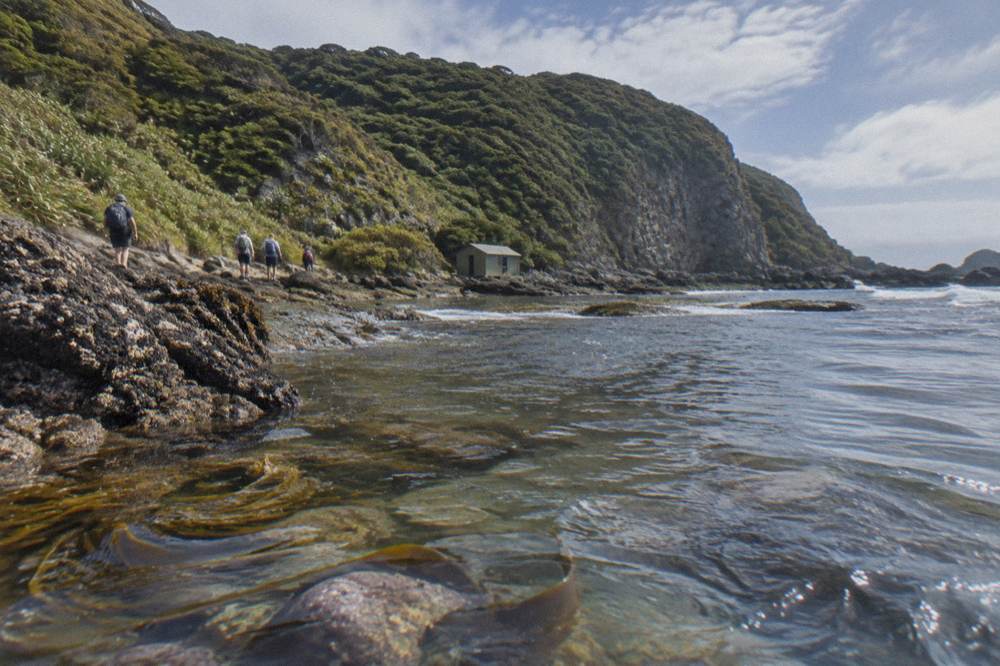
Age and fitness terms sit on each booking page, and only two tours on this site print a minimum age: the Zealandia twilight tour at 5 and the Zealandia night tour at 12. For the island trips, check the age terms before booking children in. What the operator does say about the island itself is physical: tracks are unpaved, reasonable fitness is needed, the landing is a stony beach by ramp, and the island is not wheelchair accessible. Prams are hard to manage and a carrier is advised. None of that is marine reserve law, but it is the terrain that greets you when the reserve crossing ends.
What Rules Apply Inside The Kapiti Marine Reserve?
No fishing of any kind is allowed in the reserve, and nothing may be taken or disturbed. DOC also asks visitors not to feed fish, and drone flights near marine mammals need authorisation. These rules apply to everyone on the water, including passengers on the island ferries, not only to swimmers and divers.
For most ferry passengers the marine reserve rules are passive: you ride across, you look, you land. But the rules bind kayakers, boaties and snorkellers in the surrounding sea. Fish feeding is banned because it changes behaviour, and taking or disturbing anything, is prohibited.
| Rule | What DOC says |
|---|---|
| Fishing | No fishing of any kind |
| Taking or disturbing | Take nothing, disturb nothing |
| Feeding | Do not feed fish |
| Drones | Authorisation needed near marine mammals |
| Snorkelling from the island | Only with a permit, travelling with an approved operator |
The snorkelling rule is the one that catches people out. You cannot simply swim off the island's shore with a mask: to snorkel from the island you must travel there with a permit, which in practice means arriving with the approved operator under the island's landing rules. Snorkelling from the mainland beaches is a separate matter governed by the same no-take reserve rules. Neither of this site's tours is a dive or snorkel product, so treat the reserve as the scenery and the protected context of your crossing rather than the activity itself.
Some marine rules are seasonal and easy to miss. DOC notes that korora, the little blue penguin, come ashore in the reserve between May and June and again between November and March, and asks visitors to keep their distance when that happens. Drones need authorisation near marine mammals, a rule that applies on the water just as the island's own drone permit rule applies on land. For ferry passengers these obligations are mostly ones of restraint: watch, do not throw anything, do not call animals over. The same no-take principle that stops fishing also stops collecting shells or seaweed, since nothing in the reserve may be taken or disturbed at all.
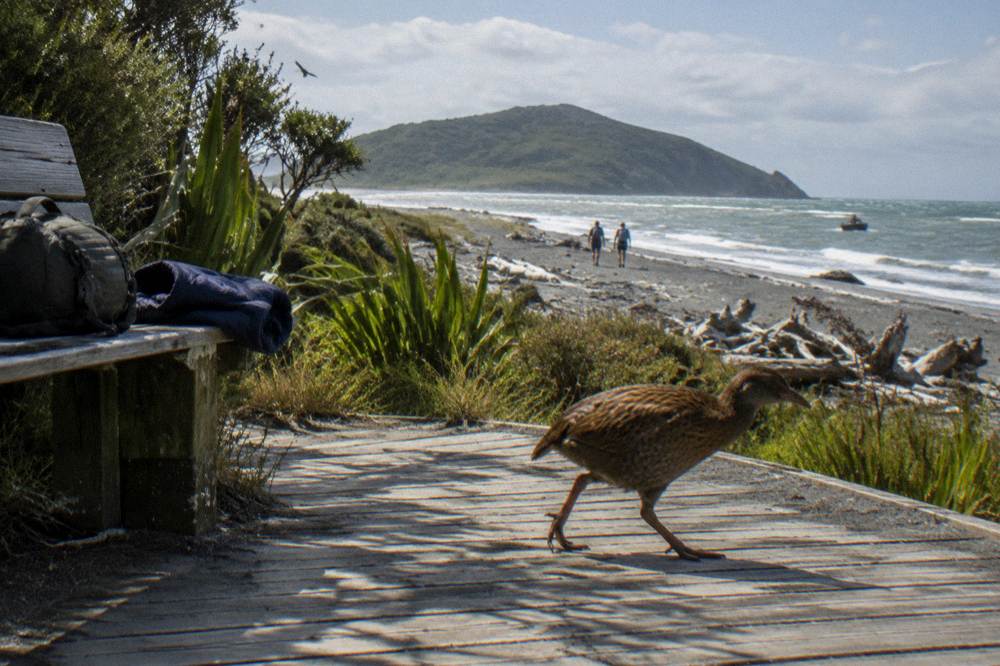
The marine reserve rules join a second set of rules that starts the moment you land. DOC's island rules ask visitors to keep 10 m from animals, give wildlife right of way, keep to formed tracks, and pack out all rubbish including fruit pips and cores. No fires or portable cooking stoves are allowed, there is no smoking or vaping, nothing may be taken off the island, wildlife must not be fed, and pets are not permitted. Drones need a permit on the island just as they need authorisation near marine mammals on the water. Weka and kaka are inquisitive and expert at getting into bags, so keep belongings out of reach.
| Where the rule applies | What is asked | Who it binds |
|---|---|---|
| On the water, inside the reserve | No fishing, no take, no disturbing, no feeding fish | Everyone, including ferry passengers |
| Near marine mammals in the reserve | Drone authorisation needed | Anyone flying a drone |
| On the island, at the landing and tracks | Keep 10 m from wildlife, keep to formed tracks, pack out all rubbish | All island visitors |
| Before boarding at Paraparaumu Beach | Bags inspected and unpacked, clean footwear and gear within 48 hours | All ferry passengers |
Reading the two rule sets side by side shows the logic. The marine reserve protects what lives in the sea, and the island's rules protect the forest. Biosecurity checks at check-in guard the boundary between the two. A visitor who respects all three is doing exactly what the reserve system was designed around. The crossing is where those rule sets overlap in a single journey, which is a fair part of why this stretch of coast feels different from an ordinary ferry ride.
Can You See Wildlife From The Kapiti Island Boat?
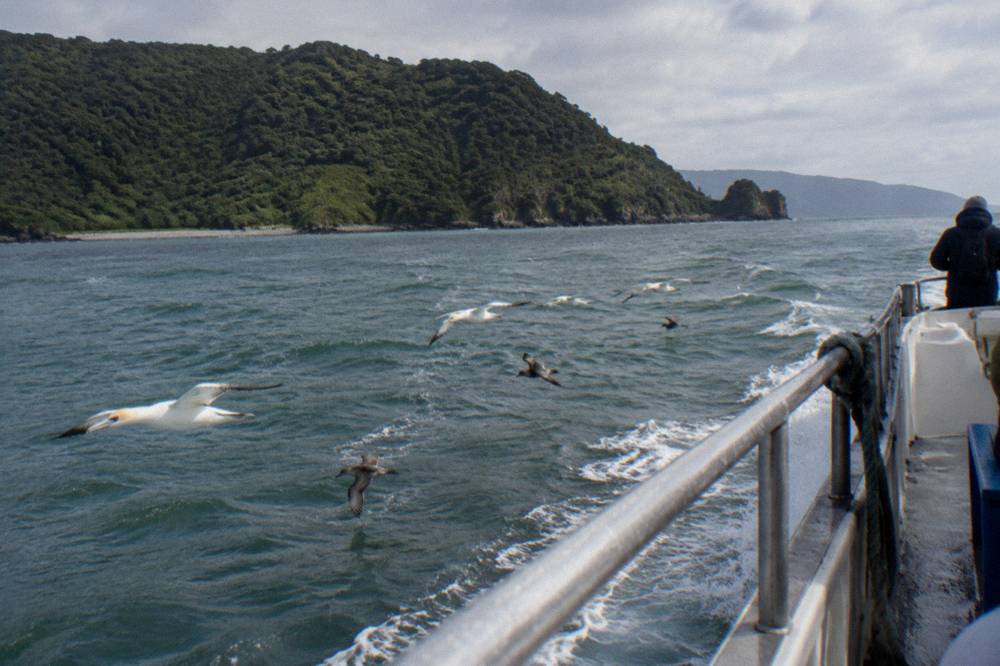
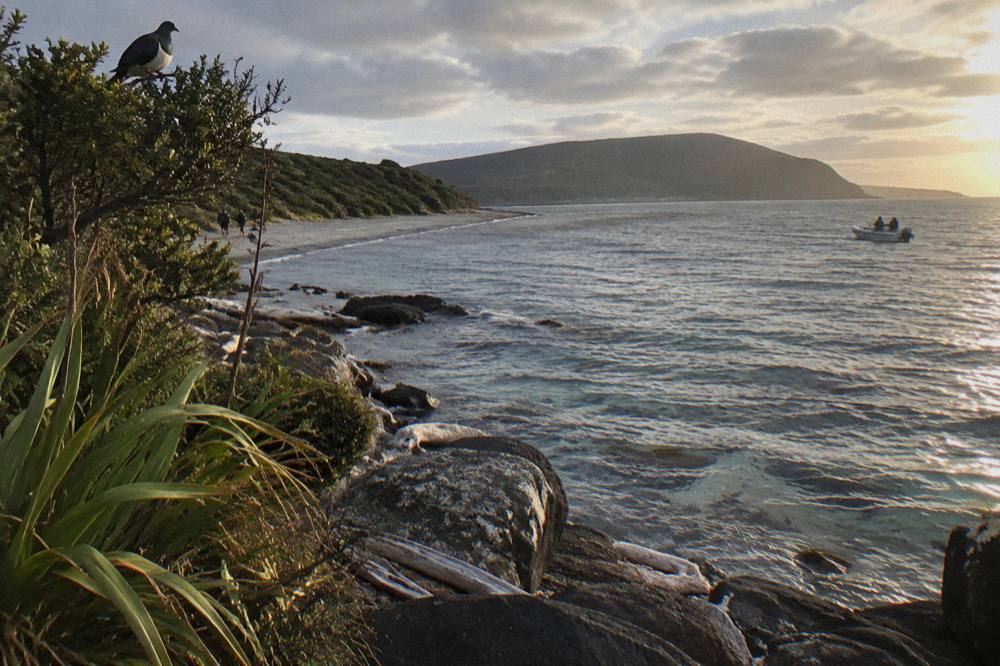
DOC names gannets, fluttering shearwaters and little blue penguins as birds often seen on the boat trip, and seals and dolphins are named in the reserve's waters. Orca, seals and korora appear on the crossing, in DOC's words, only "if you're really lucky". No tour here promises any sighting, marine or otherwise, and the weather governs what the sea shows you.
That honesty is worth settling before you board. The crossing is short, about 15 to 20 minutes per the operator, and the channel is working water, not a dedicated whale-watching route. What you get is a protected sea with resident and visiting life in it, seen at ferry speed. Gannets, fluttering shearwaters and little blue penguins are often seen on the boat trip. DOC's own marine reserve guidance names blue moki and kingfish among the reserve's fish, which divers and snorkellers know well, but from a ferry deck the birds are the show.
The island side of the crossing adds its own layer. DOC describes Kapiti as one of the largest accessible island bird sanctuaries in New Zealand, with hihi, kokako, takahe, brown teal and saddleback transferred there since the 1980s. Saddlebacks, stitchbirds and takahe are often seen, DOC says, along with kereru, kaka, tui, bellbird, weka and North Island robin among many others. None of that is promised by any tour, and the operator's own wording on kiwi is blunt: it cannot guarantee a sighting. The wild kiwi on Kapiti are little spotted kiwi, extinct on the mainland, which is why the night walk on the overnight trip carries the reputation it does.
If a dedicated marine-wildlife outing is what you are after, the Wellington seal coast safari or Kapiti Island tour comparison may help you weigh the two. The Seal Coast Safari, from $112.07 per person, rated 4.9 across 372 reviews, runs 3 hours 30 minutes to Cape Terawhiti via Terawhiti Station in a 4WD, a coastline trip rather than an island crossing, and it makes no sighting guarantee either. The Kapiti trips cross the reserve; the safari drives a wild southern coast. Some visitors do both on separate days.
How Do You Get To The Kapiti Island Boat Departure?
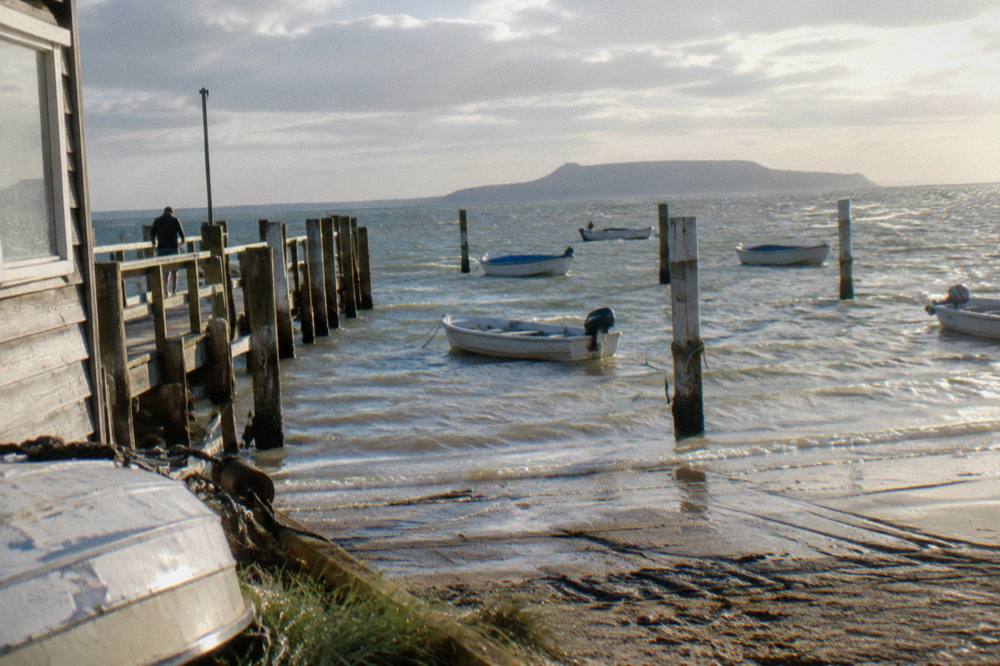
The island boats leave from the Kapiti Boating Club at Paraparaumu Beach, roughly an hour north of Wellington by road. Check-in is at the operator's office on Marine Parade, 20 to 40 minutes before sailing. Visitors can park at the Boating Club or in the carpark across the stream; the operator lists a free public car park at the Boating Club and says there is no parking on the beach.
Ferry departures fall in the morning, are confirmed at booking and by text the day before, and the day tour's start at Paraparaumu Beach is 08:45. The two Kapiti Island Nature Tours booking pages that run from the beach ask guests to phone between 7 and 7:15 am on the day to confirm the tour is going ahead. Trips are weather dependent: the skipper cancels for unsafe sea or weather, with another date or a full refund, and in severe weather guests may have to stay extra time at no extra charge. The operator's season runs 1 September to 30 June, with sailings usually daily October to mid-May and Friday to Sunday in late May, June and September depending on demand.
Timing the season matters more than most visitors expect. The lodge closes between Christmas and New Year while the ferry runs day trips only, so the overnight trip is off the table in that window even when day crossings run. The Boulder Bank Loop at the island's North End closes October to March for nesting seabirds, a small but real example of how the protected calendar shapes what a visit looks like. Booking inside the October to mid-May daily-sailing window gives you the most fallback dates if the weather turns.
Before boarding, the biosecurity checks happen here. Bags are inspected and unpacked, and visitors are asked to check clothing, footwear and bags for pests, soil, seeds and plant material, keep food in sealed containers, and clean footwear and ground-contact gear within 48 hours of sailing. A biosecurity team screens at check-in. These checks protect the island, a DOC nature reserve with strict biosecurity, where the rat eradication of September and October 1996 removed kiore and Norway rats by aerial drop. The marine reserve's no-take rules apply once you are on the water, and the island's biosecurity rules begin back at check-in.
Planning the wider day is covered elsewhere on Kapiti Island Tours, including the Kapiti Island ferry boat crossing guide, which goes deeper on the departure logistics, and the what to bring on a Kapiti Island day trip packing guide. The short version for a marine reserve visitor: bring your own food unless your trip includes it, because there is no shop on the island, bring your own drinking water because all water on the island is untreated, and pack out everything you carry in, including fruit pips and cores.
Common Questions About The Kapiti Island Marine Reserve
What Is The Kapiti Island Marine Reserve?
A fully protected marine reserve established in 1992, covering 2,167 hectares in two areas between the Paraparaumu and Waikanae beaches and Kapiti Island. No fishing is allowed and nothing may be taken or disturbed.
Can You Fish In The Kapiti Marine Reserve?
No. DOC prohibits fishing of any kind inside the reserve, along with taking or disturbing anything, and feeding fish is not allowed.
Can You Snorkel Off Kapiti Island?
Only if you travel there with a permit under the island's landing rules. You cannot swim or snorkel to the island independently, and private boats may not land.
Will I See Dolphins Or Seals On The Kapiti Island Boat Trip?
DOC names seals and dolphins in the reserve's waters and says orca, seals and korora appear on the crossing only if you are really lucky. No tour promises any sighting.
Where Does The Kapiti Island Boat Leave From?
The boats leave from the Kapiti Boating Club at Paraparaumu Beach, roughly an hour north of Wellington by road, with check-in at the operator's office on Marine Parade 20 to 40 minutes before sailing.