What Are Some Things To Do On Kapiti Island?
A practical guide to what you can actually do on Kapiti Island: guided walks, the birds DOC names, historic sites, the north end lagoon, meals, and the overnight night walk.
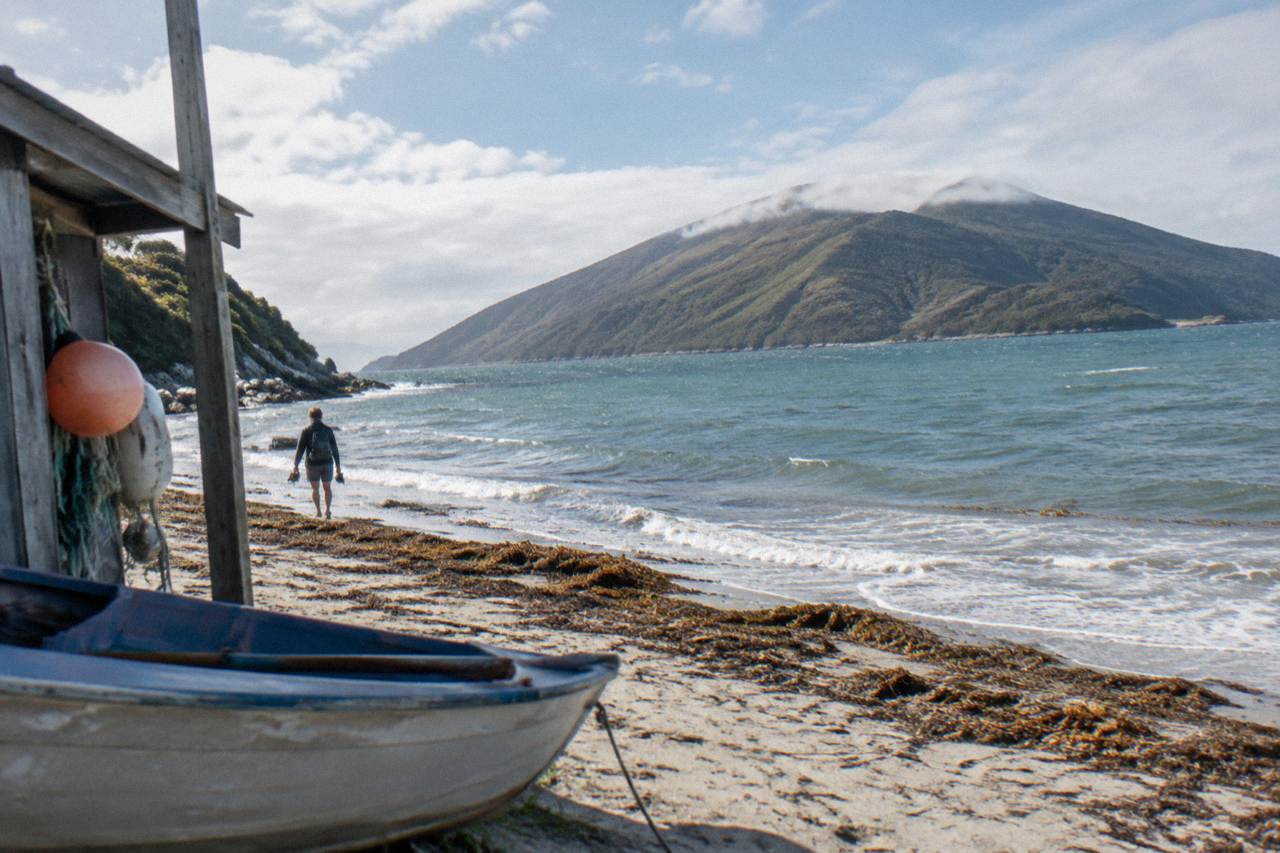
Kapiti Island sits 5 km off the west coast of the lower North Island, a 1,965 hectare reserve about 10 km long with its highest point, Tuteremoana, at 521 m. It has been a bird sanctuary since 1897, and DOC describes it as one of the largest accessible island bird sanctuaries in New Zealand. Private boats, kayaks and swimmers may not land, so everything you do on the island happens as part of an approved tour. That shapes the answer to the obvious planning question in a useful way: the activities are fewer than a mainland destination, and deeper.
Kiore and Norway rats were eradicated by an aerial drop in September and October 1996, leaving the island free of introduced mammals. What stands on that foundation now is a walkable, bird-dense landscape with two public areas, Rangatira halfway along the eastern shore and the North End, plus a pocket of private land at Waiorua Bay where the tour operator's lodge stands. One operator, Kapiti Island Nature Tours, holds the DOC concession for transport, guided walks, overnight kiwi spotting and lodge accommodation, and this site carries its three trips: the 5-hour day tour from $186.78 per person, the 2-day overnight from $401.73 per person, and the Wellington-return day tour at $305 per person.
The core things to do are a guided nature and history walk, watching the native birds DOC names for the island, visiting the historic whare and whaling trypots at Rangatira, walking the tracks, eating lunch at the lodge at Waiorua Bay, and, on the overnight trip, a guided night walk. Every activity runs through the one DOC-listed operator, and day trips start from Paraparaumu Beach on the Kapiti Coast, roughly an hour north of Wellington. Before you lock in a day trip, the guide to Kapiti Island walk times and fitness needs shows how the guided walk compares with the DOC tracks from Rangatira and the North End.
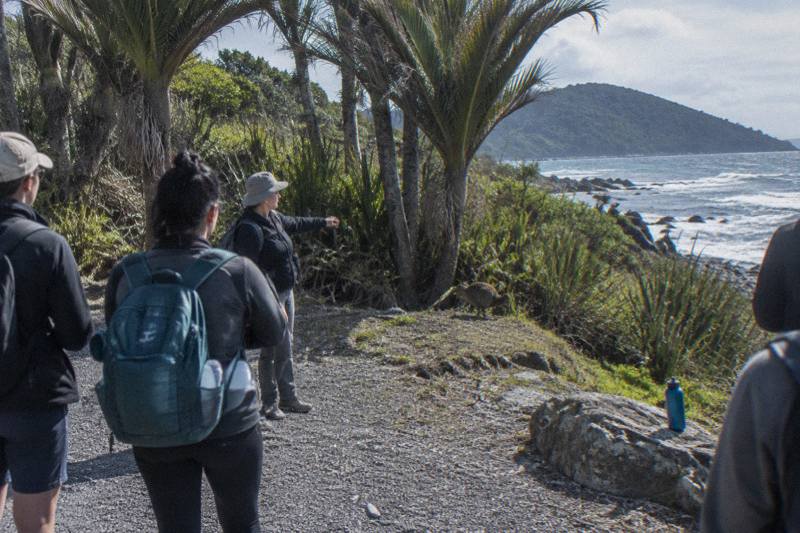
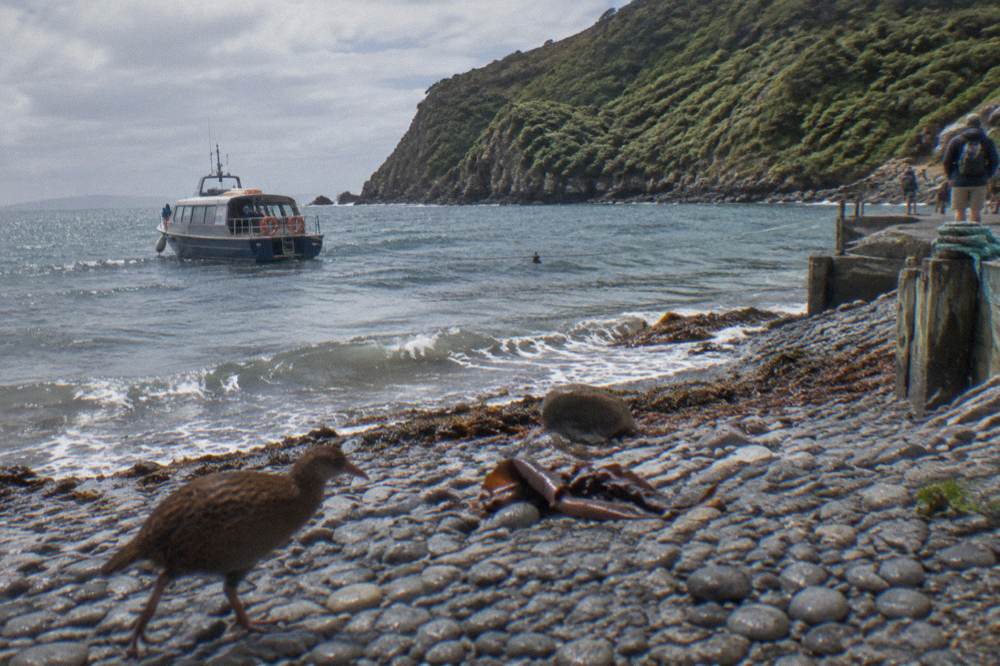
The shape of a visit is simple. A ferry crosses the Rauoterangi Channel in about 15 to 20 minutes, the operator says, landing on a stony beach by ramp. From there the day splits between walking, watching and listening. Birds move through the bush close enough that the main challenge is keeping your bag shut: DOC warns that weka and kaka are inquisitive and expert at getting into bags, so belongings stay out of reach.
There is no shop on the island and nowhere to buy food, the operator notes, so unless your trip includes a meal you carry your own in sealed containers. Open bags of food are not allowed through biosecurity. Bags are inspected and unpacked before boarding, and the operator asks that footwear and ground-contact gear be cleaned within 48 hours of sailing. These rules are the reason the island still works as a sanctuary, and they take only a few minutes at check-in.
For readers weighing the full spread of island trips before digging into activities, the comparison page on Kapiti Island tours compared breaks down the three operator trips side by side.
What Does The Guided Walk Cover On Kapiti Island?
The guided walk on the day tour is a nature and history walk of about 1 hour, led by a guide after an introductory talk. The 5-hour day tour is rated 4.8 across 576 reviews and costs from $186.78 per person with lunch included.
The guided walk is the backbone of the day tour because a guide turns the forest from scenery into story. DOC's record of the island covers more than a century of conservation: hihi, kokako, takahe, brown teal and saddleback have been transferred to the island since the 1980s, and Richard Henry, described as the world's first state sponsored conservation officer, was caretaker from 1908.
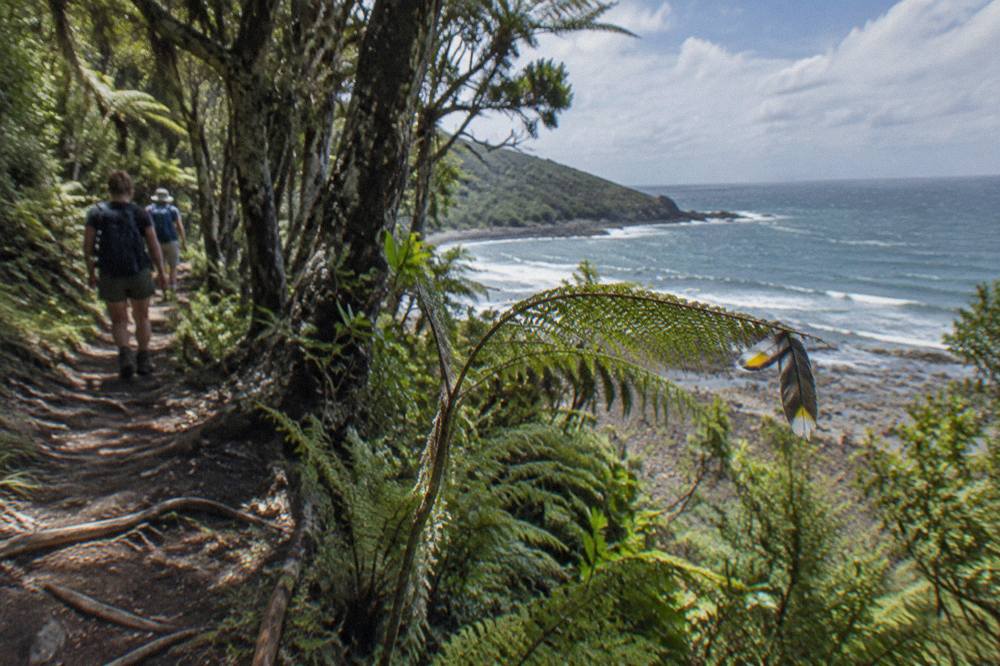
Every track on the island is unpaved, and the operator advises reasonable fitness. The landing itself is a stony beach, the island is not wheelchair accessible, and prams are hard to manage, so a carrier is advised for small children. For walkers wanting more than the loop, DOC lists the Wilkinson Track at 2 hours, 3.8 km one way to the summit at Tuteremoana, with a picnic area and a hihi feeding station a third of the way up, and the steeper Trig Track at 2 hours, 2 km one way, uphill direction only.
It is not currently possible to walk from Rangatira to Waiorua, the operator says, so the island's two public areas are visited on separate itineraries rather than stitched into one hike. Day trips in the operator's season, 1 September to 30 June, usually run daily from October to mid-May.
Which Birds Can You See On Kapiti Island?
DOC names kereru, kaka, tui, bellbird, weka, North Island robin, tomtit, whitehead, fantail, silvereye and saddleback in the forest, and says saddlebacks, stitchbirds and takahe are often seen. On the water, gannets, fluttering shearwaters and little blue penguins are described as often present. No tour promises any sighting, and the operator says it cannot guarantee a kiwi.
Birds are the island's main event, and DOC's own species list is the honest measure of what a day might hold. The summer-only long-tailed cuckoo is on DOC's list too.
Around the coast DOC names gulls, white-fronted terns, variable oystercatchers, reef herons and shags. On the crossing itself, gannets and fluttering shearwaters are commonly around the boat, and DOC's phrasing for orca, seals and korora is only "if you're really lucky". That wording deserves repeating to yourself when a brochure implies otherwise: marine mammals on the crossing are a bonus, never a booking reason.
| Where | Birds DOC names | How often DOC words it |
|---|---|---|
| Forest | Saddleback, stitchbird (hihi), takahe, kaka, kereru, tui, bellbird, weka, North Island robin, tomtit, whitehead, fantail, silvereye, kokako, brown teal | Saddlebacks, stitchbirds and takahe "often seen" |
| Coast | Gulls, white-fronted tern, variable oystercatcher, reef heron, shags | Present around the shoreline |
| Crossing | Gannets, fluttering shearwaters, little blue penguins | "Often" |
| Crossing, lucky days | Orca, seals, korora | Only "if you're really lucky" |
The little spotted kiwi is the island's most famous resident, a species extinct on the mainland, DOC notes. It is nocturnal, which is why the overnight trip exists: the guided night walk looks for ruru, korora and kiwi pukupuku. The operator is direct that it cannot guarantee a kiwi sighting, and no honest page should either. The overnight trip is rated 4.9 across 484 reviews, from $401.73 per person for 2 days, with dinner, breakfast and two lunches included.
Readers comparing the island's wild kiwi with fenced-sanctuary options can weigh the choices in kiwi spotting tours near Wellington, which includes Zealandia's night tour and the Nga Manu encounter alongside the island overnight.
What Is There To See At Rangatira?
Rangatira holds the island's history in physical form: whaling trypots from the whaling era, The Whare of the early 1860s, the oldest building on Kapiti, and a wetland boardwalk on the 1.8 km loop track. DOC's brochure caps visitors at 100 a day in this area.
The whare is a modest building with an outsized story. Te Rauparaha of Ngati Toa was dominant on the island by 1823, DOC records, and whaling and then farming from about 1850 reshaped the eastern shore before the island was reserved as a sanctuary in 1897. Trypots from the whaling stations sit on the loop as visible artefacts of that era, and the whare survives from the early 1860s farming period.
- Zealandia Tours$40.23
- Kapiti Coast Nature Tours$56.90
- Wellington Seal Coast Tours$112.07
- Kapiti Island Tours$186.78
The wetland boardwalk on the loop adds a second habitat to the walk. Rangatira also has the island's main facilities: toilets, a public shelter and fresh drinking water at the visitor shelter, though DOC advises that all water on the island is untreated and visitors should bring their own. At Waiorua there are toilets and a shelter but no fresh drinking water at the shelter, a detail that matters for anyone packing bottles.
The Rauoterangi Channel you crossed to get here carries its own history: DOC names it after Kahe Te Rauoterangi's swim. Below it lies the Kapiti Marine Reserve, established in 1992 across 2,167 ha in two protected areas, where no fishing of any kind is allowed and nothing may be taken or disturbed. Blue moki, kingfish, seals and dolphins are named in the reserve, and snorkelling from the island's shores requires travelling there with a permit, which is another way of saying the day tour is a walking trip, not a swimming one.
What Can You Do At The North End Of Kapiti Island?
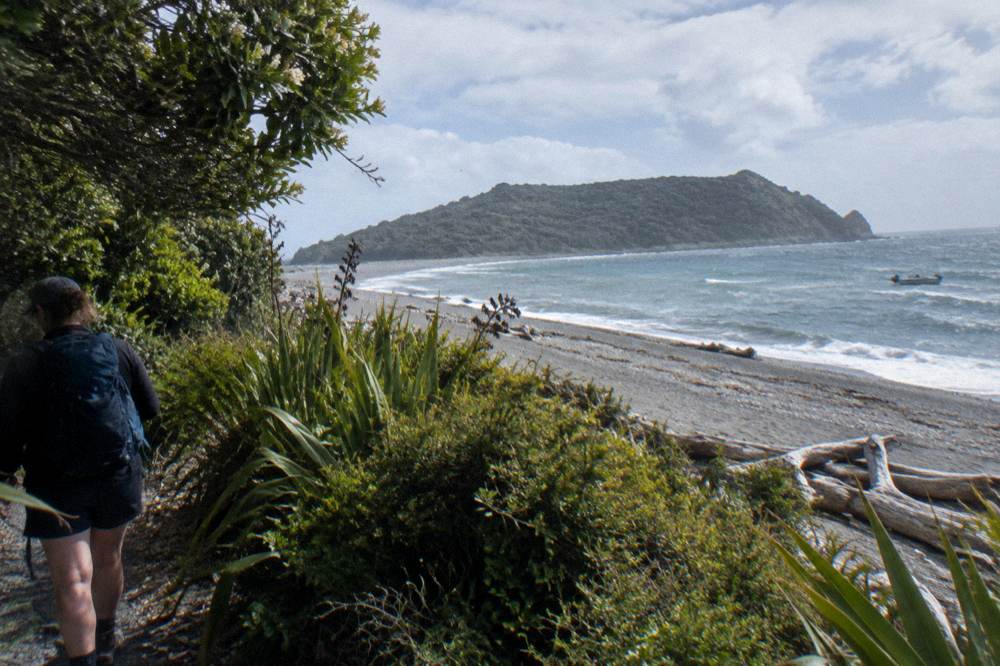
The North End's walks are the Okupe Valley Loop, 4.8 km and 1 hour 30 minutes on a gentle gradient to a 198 m lookout above the western cliffs, and the Boulder Bank Loop, 45 minutes and 2 km, which closes from October to March for nesting seabirds. Okupe Lagoon below the lookout draws scaup, grey and brown teal, black swans and royal spoonbills.
The north end is the quieter half of the island and the lagoon is its centrepiece. From the lookout the view runs down the western cliffs to the water below, where waterfowl gather on the lagoon's surface. DOC's brochure caps North End visitors at 60 a day.
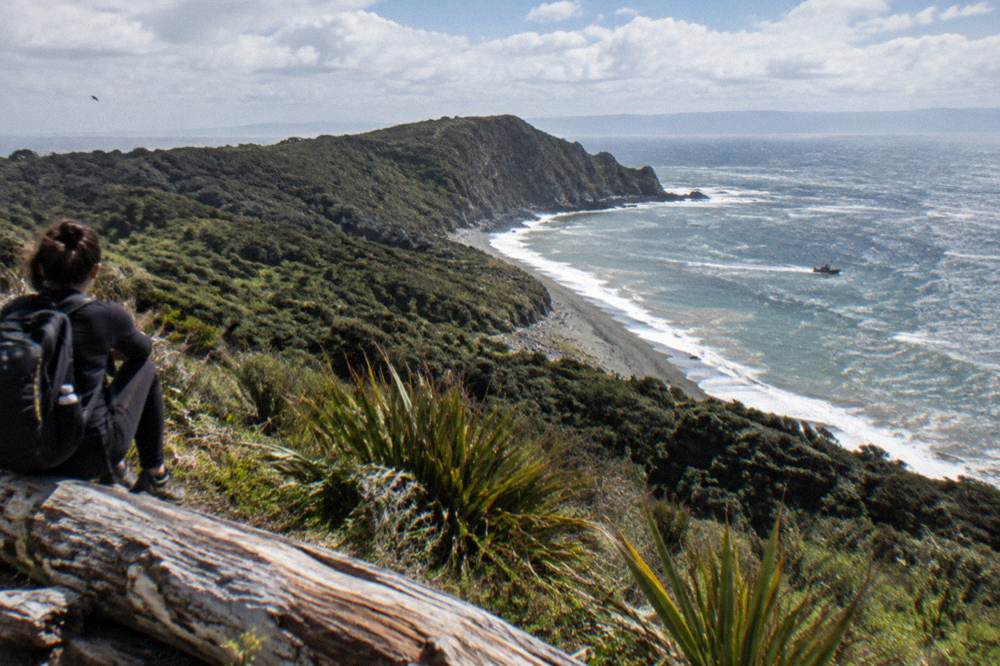
Timing matters for one track in particular. The Boulder Bank Loop's closure from October to March lines up almost exactly with the busiest visitor season, because that is when seabirds nest along the stones. Visitors in late autumn or winter, when sailings run Friday to Sunday depending on demand, get the loop back.
The practical difference between the two areas is facilities and access: Rangatira has the shelter and drinking water, Waiorua has the lodge, and the operator says you cannot walk between them. Which end you visit depends on which trip you book, a point worth checking before you commit.
Where Do You Eat On A Kapiti Island Tour?
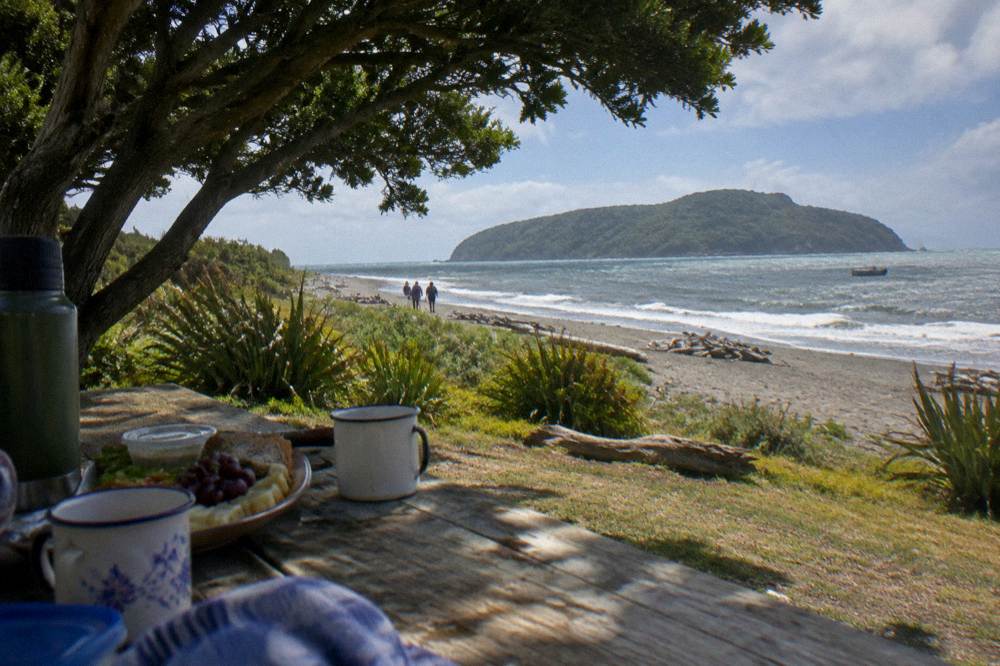
Lunch at the lodge is included on the 5-hour day tour, the Wellington-return day tour includes a cooked lunch, and the overnight trip includes dinner, breakfast and two lunches. There is no shop and nowhere to buy food on the island, so on any trip without a meal included you carry your own in sealed containers, and open bags of food are not allowed through biosecurity.
The lodge sits on private land at Waiorua Bay, not inside the nature reserve. DOC is clear that overnight stays are not permitted within the reserve itself, and it is on the operator's land around Waiorua that the homestay and lodge option stands. Local tangata whenua kept 13 ha around the bay, the operator notes, which is why this pocket of the island is not public reserve.
The meal turns a walking day into a full day out. On the classic day tour, lunch at the lodge breaks the middle of the 5 hours; the trip starts at Paraparaumu Beach at 08:45, with check-in at the operator's office on Marine Parade 20 to 40 minutes before sailing. On the Wellington-return version, the 6-hour figure includes the shuttle legs from Wellington accommodation, and a cooked lunch is included on the island.
| Trip | Duration | Meal included | Price from (USD, per person) |
|---|---|---|---|
| 5-Hour Day Tour, Meal Included | 5 hours | Lunch at the lodge | $186.78 |
| 6-Hour Day Tour, Wellington Pickup | 6 hours including shuttle | Cooked lunch | $305.00 |
| 2 Days 1 Night, Meals Included | 2 days, 1 night | Dinner, breakfast, 2 lunches | $401.73 for 2 days |
The DOC permit is included in the operator's trips, so there is no separate paperwork for a visitor to arrange. What remains on you is the biosecurity packing: food sealed, bags clean, footwear scrubbed. The operator's biosecurity team screens at check-in before boarding.
What Happens On The Overnight Night Walk?
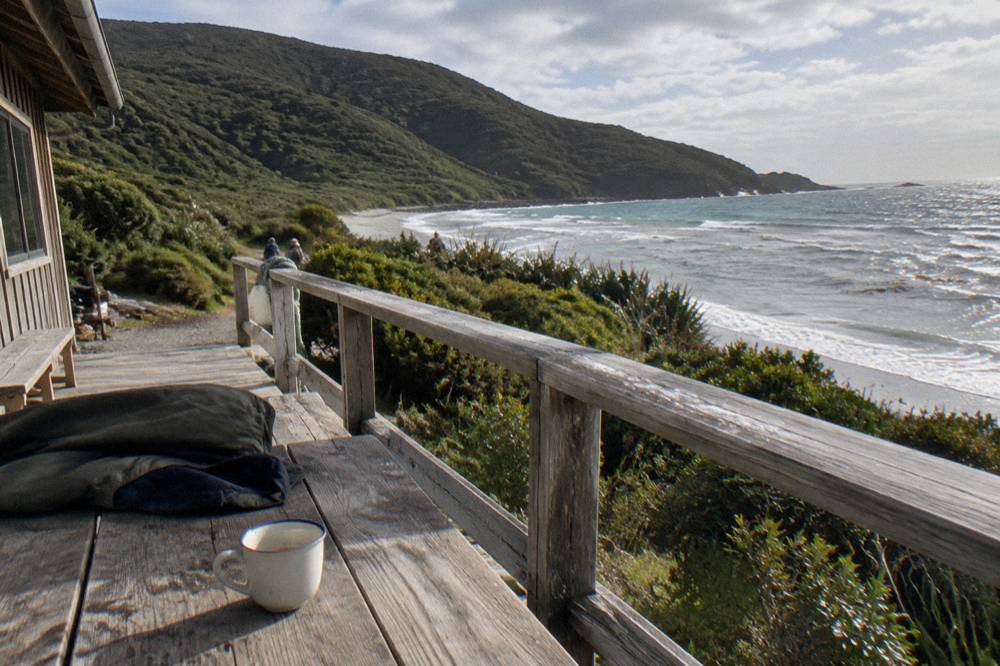
The overnight trip's guided night walk looks for ruru, korora and kiwi pukupuku with a guide, after dark on the operator's private land at Waiorua Bay. The operator cannot guarantee a kiwi sighting, quiet clothing is requested because nylon and jandals can disturb kiwi, and cabins and tents have solar lights and no power supply.
The overnight is the deepest version of an island visit, and the night walk is its reason to exist. The wild kiwi on Kapiti are little spotted kiwi, DOC notes, a species extinct on the mainland, and the night walk moves through their habitat with ears doing most of the work.
The stay itself is on private land, never inside the DOC reserve. Accommodation runs across cabins, tents and ensuite options, each with its own rate, which is why the overnight price of $401.73 per person for 2 days sits apart from day-trip price comparisons. The group max is 18. Weather matters here too: the trip needs good weather, and a weather cancellation brings another date or a full refund, with free cancellation up to 24 hours before the start.
Both the day tour and the overnight booking pages ask guests to phone between 7 and 7:15 am on the day to confirm the trip is going ahead. DOC adds its own advice: contact the operator on the morning of the trip for a weather check. In severe weather guests may have to stay extra time at no extra charge, the operator says, which is worth knowing before you book a tight next-day schedule.
Readers building a Wellington-plus-island week can also look at day tours from Wellington with a Kapiti Island trip, which pairs the island with the Seal Coast Safari, a 3 hour 30 minute small-group 4WD trip to Cape Terawhiti rated 4.9 across 372 reviews, from $112.07 per person.
What Are The Rules You Need To Know Before Landing?
DOC's island rules are: keep 10 m from animals, wildlife has right of way, keep to formed tracks, pack out all rubbish including fruit pips and cores, no fires or portable cooking stoves, no smoking or vaping, take nothing off the island, do not feed wildlife, no pets, and drones need a permit. Bags are inspected and unpacked before boarding, and open bags of food are not allowed.
The rules are strict because the island's value depends on them. A single seed or a rat could undo decades of work: the goat eradication of 1928, possum destruction from 1980 to 1986, and the September to October 1996 aerial drop that removed kiore and Norway rats, leaving the island free of introduced mammals. Every visitor passes through the same biosecurity screen, and it applies to clothing and footwear as much as to bags.
On the water, the marine reserve rules stack on top: nothing taken, nothing disturbed, no feeding of fish, and drone authorisation is needed near marine mammals. The 10 m rule and the right-of-way rule mean the birds set the pace of your walk. Weka will investigate anything left on the ground, and kaka can open what weka cannot, hence the advice to keep belongings out of reach.
None of this is onerous, and most of it is common sense once you are standing on the beach. What it does mean is that a Kapiti Island visit is a guided, contained experience rather than a free-roaming one, and the activities that fill it, walking, watching, eating and listening, are exactly what the sanctuary was built to protect. For the full range of options across the island, the coast and Wellington's wildlife sanctuaries, Kapiti Island Tours gathers every trip this site covers.
Common Questions About Things To Do On Kapiti Island
What Are Some Things To Do On Kapiti Island?
A guided nature and history walk of about 1 hour, bird watching from DOC's species list, visiting the whaling trypots and the whare at Rangatira, walking the Okupe Valley Loop at the North End, lunch at the lodge at Waiorua Bay, and on the overnight trip, a guided night walk looking for ruru, korora and kiwi pukupuku.
Can You Walk Around Kapiti Island On Your Own?
Every visit runs through the one DOC-listed operator, and walks follow DOC's tracks: the Rangatira Loop of 1.8 km, the Wilkinson and Trig tracks to the summit, and the Okupe Valley and Boulder Bank loops at the North End. It is not currently possible to walk from Rangatira to Waiorua, and visitors keep to formed tracks under DOC's island rules.
Is Food Available On Kapiti Island?
There is no shop and nowhere to buy food on the island. The 5-hour day tour includes lunch at the lodge, the Wellington-return day tour includes a cooked lunch, and the overnight trip includes dinner, breakfast and two lunches. On any trip without a meal, carry your own food in sealed containers; open bags of food are not allowed through biosecurity.
Can You See Kiwi On Kapiti Island?
The wild kiwi on Kapiti are little spotted kiwi, a species extinct on the mainland, and the overnight trip includes a guided night walk looking for ruru, korora and kiwi pukupuku. The operator says it cannot guarantee a kiwi sighting, so treat any kiwi encounter as possible rather than promised.
How Long Do You Spend On The Island On A Day Tour?
The classic day tour runs 5 hours total from Paraparaumu Beach, starting at 08:45, and includes the ferry crossing of about 15 to 20 minutes, an introductory talk, the guided walk and lunch at the lodge. The Wellington-return version is listed at 6 hours, which includes the shuttle legs from Wellington accommodation.
What Are The Rules On Kapiti Island?
DOC requires visitors to keep 10 m from animals, give wildlife right of way, keep to formed tracks, and pack out all rubbish. No fires, cooking stoves, smoking, vaping, pets or feeding wildlife, and drones need a permit. Bags are inspected before boarding, and nothing may be taken off the island.