How Long Does It Take To Walk Up Kapiti Island?
The summit walk up Kapiti Island: Wilkinson Track and Trig Track times, distances, fitness needs, and how the walk fits around a guided island tour.
Walking up Kapiti Island to the summit at Tuteremoana takes 2 hours one way on either summit track, according to the Department of Conservation's track guide. The Wilkinson Track covers 3.8 km one way, while the Trig Track is a shorter but steeper 2 km one way and is signposted for uphill walking only. Both tracks finish at the same 521 m high point.
The answer comes with an important caveat. Kapiti Island is a DOC nature reserve with no free wandering: access is only through approved tour operators, and what you can walk depends entirely on which trip you book and which part of the island it lands at. The summit tracks sit behind that access, so the walking time is only half of the picture. The other half is the tour that gets you there.
DOC describes Kapiti as one of the largest accessible island bird sanctuaries in New Zealand, a predator-free reserve of 1,965 ha lying about 5 km off the coast, roughly an hour north of Wellington by road. About 10 km long and 2 km wide, it rises to Tuteremoana at 521 m, and the island's two public areas, Rangatira halfway along the eastern shore and the North End, each carry their own track networks. The summit tracks climb from the Rangatira side, through forest where rats were eradicated by aerial drop in September and October 1996. To plan a realistic day out there, the guide to Kapiti Island walking times compares the guided tour with the DOC tracks from Rangatira and the North End, including the fitness each one demands.
A reader sizing up the summit walk is usually really asking whether to book a guided island trip, and which one. The classic day tour, the overnight stay and the Wellington-return day tour are all run by one operator, Kapiti Island Nature Tours, the only concessionaire DOC lists for the island. If the climb is the goal, the choice of tour shapes the day more than the track choice does.
Planning the full day out, from the ferry check-in at Paraparaumu Beach to the last hour of downhill, is easier with the background in one place. The guide to a Kapiti Island day trip covers the timing of a visit end to end, and the deeper comparison lives in Kapiti Island tours compared.
How Steep Is The Walk To Tuteremoana?
The Wilkinson Track climbs 3.8 km one way over 2 hours, with a picnic area and a hihi feeding station about a third of the way up. The Trig Track covers the same height in 2 km, which DOC calls steeper, and it is marked for uphill traffic only. Neither track is paved, and both demand reasonable fitness.
- Zealandia Tours$40.23
- Kapiti Coast Nature Tours$56.90
- Wellington Seal Coast Tours$112.07
- Kapiti Island Tours$186.78
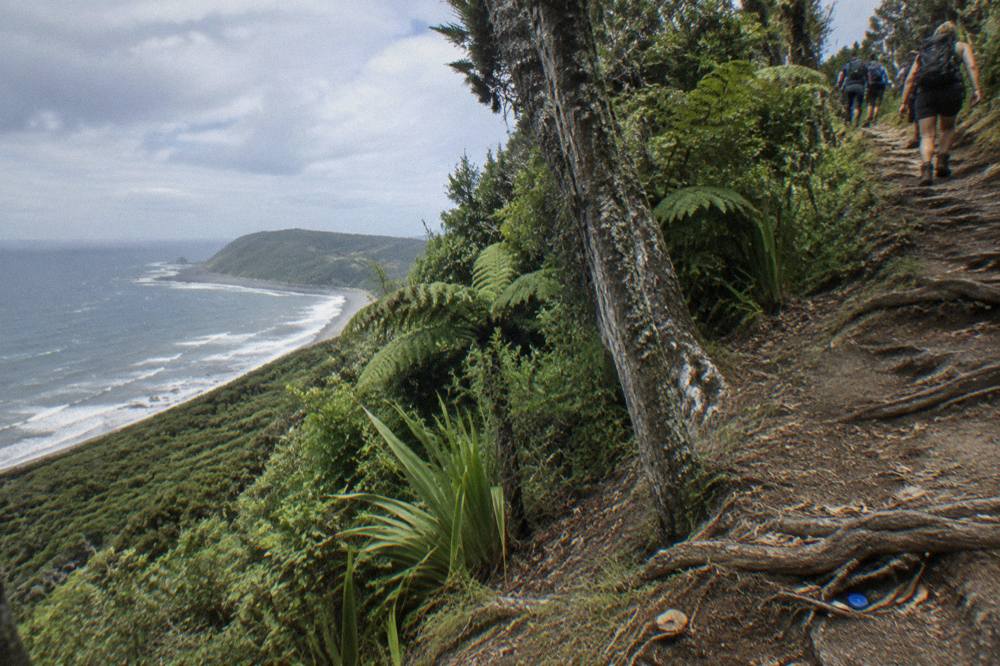
The two summit tracks answer to different temperaments. The Wilkinson is the main spine: longer, gentler in feel, and broken up by that midway stopping point where stitchbirds, called hihi, come to a feeding station and where walkers rest before the upper climb. Because the Trig Track runs uphill only, most parties ascend one way and descend the other, or simply take the Wilkinson both ways and treat the Trig as an option they pass on. DOC's figures are the ones to plan on: 2 hours each way, whichever track carries you up.
Here is how the two tracks line up side by side, using DOC's track guide figures:
| Track | One-way time | One-way distance | Character |
|---|---|---|---|
| Wilkinson Track | 2 hours | 3.8 km | Climb to the summit, picnic area and hihi feeding station a third of the way up |
| Trig Track | 2 hours | 2 km | Steeper, shorter, uphill direction only |
The operator notes that island tracks are unpaved and that reasonable fitness is needed, which matches the nature of a 521 m climb on a protected island where the tracks are kept as natural as the forest around them. DOC's guidance on wildlife applies on the way up as on the flat: keep 10 m from animals, wildlife has right of way, and keep to the formed tracks.
Can You Walk To The Summit On A Guided Kapiti Island Day Tour?
The Kapiti Island Classic Guided Day Tour includes a guided nature and history walk of about 1 hour, not a summit climb. The 5-hour trip, from $186.78 per person, centres on a guided walk and lunch at the lodge rather than the 2-hour ascent. Walkers who want Tuteremoana should plan around the tour's structure, not assume it includes the top.
This is the distinction that catches most first-time visitors. The classic day tour, rated 4.8 across 576 reviews, runs from Paraparaumu Beach with check-in at the operator's office on Marine Parade, starts at 08:45, and pairs the ferry crossing with an introductory talk, the roughly 1 hour guided walk, and lunch. It is a superb introduction to the island's birds and history. Its guided walk, though, stays at Waiorua on the North End; the Rangatira tracks, summit climb included, belong to the operator's separate self-guided day trip, and no island trip on this site promises the climb.
Walkers weighing the summit against the tour have a practical question: how much of the day is left after the guided portion, and does the itinerary allow a self-guided ascent within the visit window? That answer sits with the operator and the day's schedule, so it belongs in your booking conversation rather than in a fixed promise here. What can be said plainly is the arithmetic of effort: 2 hours up and 2 hours down, per DOC, is a serious bite out of any day that also carries a ferry crossing, a guided walk and a lodge lunch.
For the tour itself, and the timing around it, check availability on the booking page through the tour page on this site.
What Other Tracks Are On Kapiti Island?
Besides the two summit tracks, Kapiti Island carries the Rangatira Loop Track, 1 hour 30 minutes for 1.8 km, and at the North End the Okupe Valley Loop, 1 hour 30 minutes for 4.8 km, plus the Boulder Bank Loop, 45 minutes for 2 km, closed October to March for nesting seabirds. Together they cover the two public areas of the reserve.
The North End is a different visit, reached on trips that land at Waiorua Bay, and its Okupe Valley Loop climbs gently to a 198 m lookout above the western cliffs with views over Okupe Lagoon, where DOC names scaup, grey and brown teal, black swans and royal spoonbills on the water.
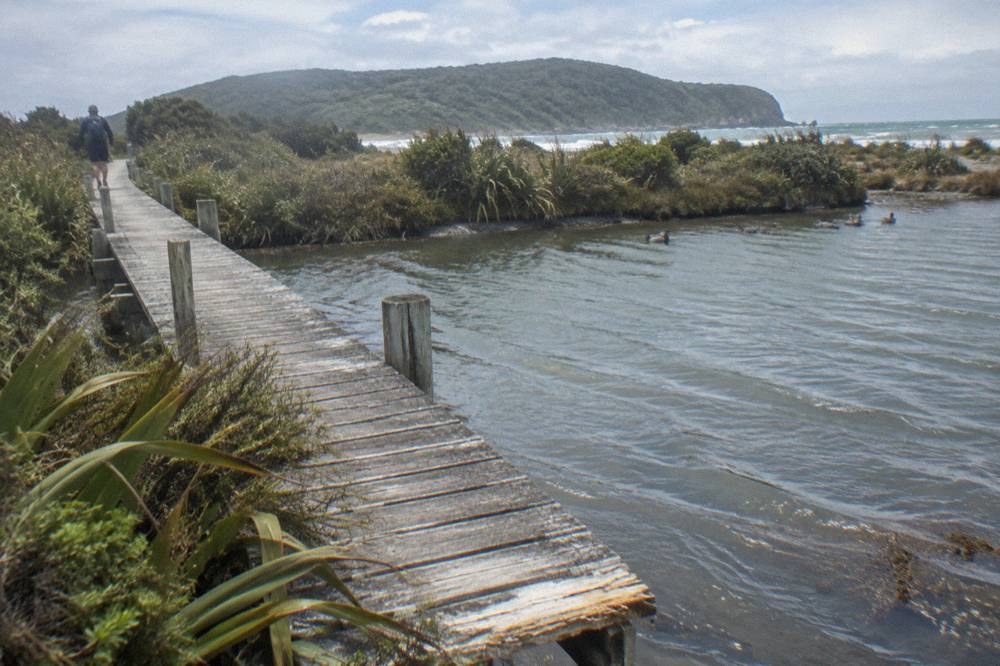
The full island track set, with DOC's figures:
| Track | Area | Time | Distance |
|---|---|---|---|
| Wilkinson Track (summit) | Rangatira | 2 hours one way | 3.8 km one way |
| Trig Track (summit) | Rangatira | 2 hours one way | 2 km one way |
| Rangatira Loop Track | Rangatira | 1 hour 30 minutes | 1.8 km loop |
| Okupe Valley Loop | North End | 1 hour 30 minutes | 4.8 km loop |
| Boulder Bank Loop | North End | 45 minutes | 2 km loop, closed October to March |
Two boundaries matter here. First, the operator says it is not currently possible to walk from Rangatira to Waiorua, so the two public areas cannot be linked into one long tramp. Second, the Boulder Bank Loop's seasonal closure protects nesting seabirds over the New Zealand summer, which is exactly the window most travellers visit in. Checking track status with the operator before the day keeps a North End itinerary honest.
How Fit Do You Need To Be To Walk Up Kapiti Island?
Reasonable fitness is enough for the island's tracks, and the overnight trip asks for moderate fitness. The summit climb gains 521 m over 2 hours on unpaved track, the landing itself is a stony beach reached by ramp, and the island is not wheelchair accessible, with prams hard to manage and a carrier advised for small children.
Fitness on Kapiti is less about raw steepness and more about time on your feet inside a fixed schedule. A summit attempt takes up to 4 hours, but those tracks are at Rangatira, a separate landing; the Classic Day Tour lands at Waiorua instead, on ground that can be rooty and damp underfoot. DOC's wildlife rules add a small tax on attention too: kaka and weka are inquisitive and expert at getting into bags, so belongings stay closed and out of reach while you watch your footing.
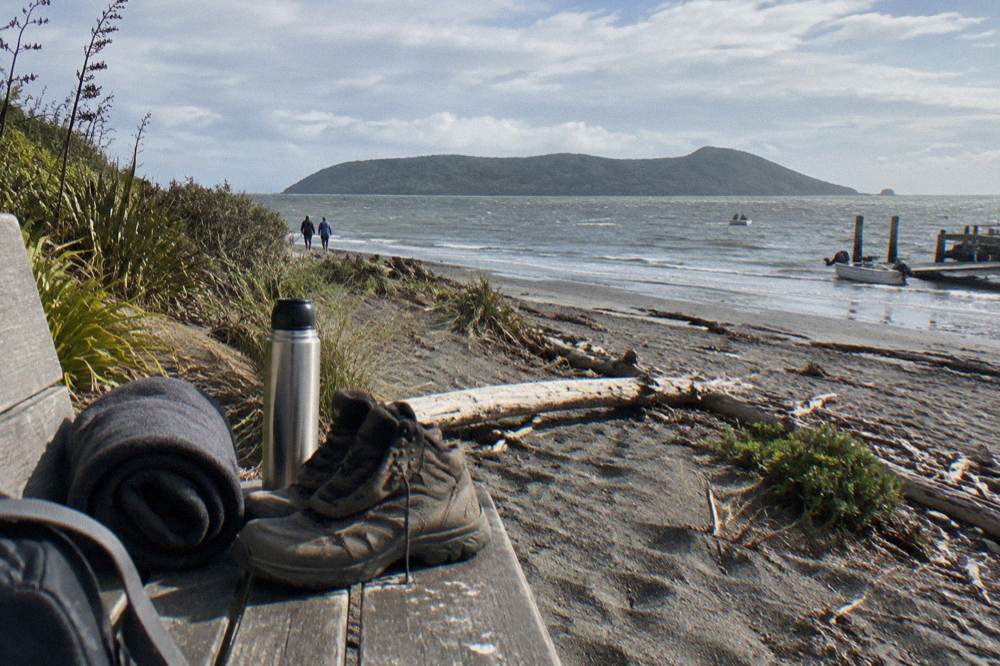
The operator's guidance on age and health terms sits on each booking page. The classic day tour's booking page states no minimum age. Families weighing the decision will find the practical detail in the guide to a Kapiti Island tour with children, including the carrier advice and what the island's facilities do and do not include, such as no shop and nowhere to buy food.
What Should You Bring For The Kapiti Island Walk?
Bring your own food and water, clean your footwear and ground-contact gear within 48 hours of sailing, and pack everything in bags that can be inspected and unpacked before boarding. DOC bans open bags of food, requires rubbish including fruit pips and cores to be carried out, and asks walkers to keep food in sealed containers. All water on the island is untreated.
The biosecurity regime is the part of a Kapiti visit that surprises people, and it exists for a good reason: the island's mammal-free status, secured when rats were removed by aerial drop in September and October 1996, is the entire foundation of its birdlife. A biosecurity team screens bags at check-in, and DOC's rules are specific. Check clothing, footwear and bags for pests, soil, seeds and plant material before you leave home. No fires, no portable cooking stoves, no smoking or vaping, no pets, and drones need a permit. Take nothing off the island, and do not feed wildlife.
Water deserves a separate line. DOC says all water on the island is untreated and to bring your own, and the operator notes that Rangatira has fresh drinking water at the visitor shelter while Waiorua's shelter does not. For a summit day, carrying your own supply is the safe plan regardless of where you land. The full packing detail, including what to wear for a boat crossing and an island day, is in what to bring on a Kapiti Island day trip.
Does The Overnight Trip Give You More Time On The Tracks?
The overnight experience, from $401.73 per person for 2 days, lands at Waiorua Bay on the operator's private land, since DOC permits no overnight stays inside the nature reserve. It includes a guided night walk looking for ruru, korora and kiwi pukupuku, with the operator clear that no kiwi sighting can be guaranteed.
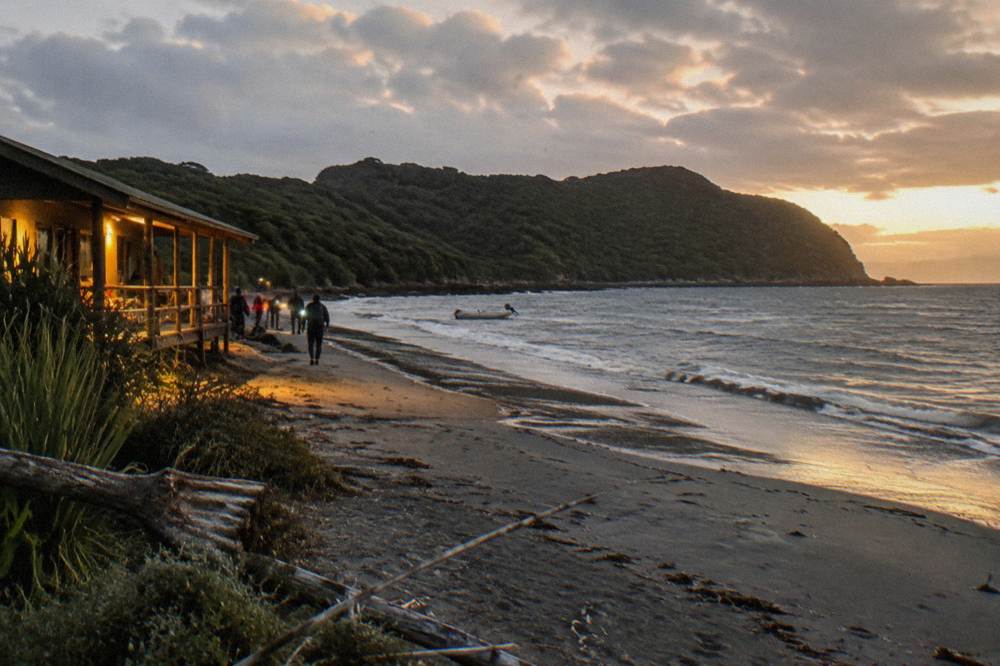
More time is exactly what the overnight buys: two days on and around the island instead of one, with meals included, dinner, breakfast and two lunches, and a group capped at 18. The stay itself is on private land at Waiorua Bay, in cabin, tent or ensuite accommodation, each with its own rate. Day one of the overnight tour is spent at Rangatira, with luggage taken by boat to the lodge at Waiorua. There is no walking link between the two areas.
The night walk changes the character of the trip entirely. Wild kiwi on Kapiti are little spotted kiwi, a species extinct on the mainland, and the guided walk goes out looking for them alongside ruru and korora. The operator asks for quiet clothing for kiwi spotting, noting that nylon and jandals can disturb them, and cabins and glamping tents have solar lights and no power supply. Free cancellation runs up to 24 hours before the start, and a weather cancellation earns another date or a full refund, with the skipper calling off unsafe sea conditions. The deeper detail on the stay is in the guide to the Kapiti Island overnight stay.
When Is The Best Season For The Kapiti Island Walk?
The operator's season runs 1 September to 30 June, with sailings usually daily from October to mid-May and Friday to Sunday in late May, June and September depending on demand. The lodge closes between Christmas and New Year while the ferry runs day trips only. Trips are weather dependent, and the skipper cancels for unsafe sea or weather.
Because every sailing needs good conditions, the classic day tour and the overnight both carry a good-weather clause, with another date or a full refund when the skipper cancels. The two Kapiti booking pages ask guests to phone between 7 and 7:15 am on the day to confirm the tour is going ahead, and in severe weather the operator notes guests may need to stay extra time at no extra charge.
Winter, meaning July and August, sits outside the season entirely, so the walking question is really a September-to-June question. Within that, the Boulder Bank Loop closure from October to March only bites North End itineraries. Weather handling in full, including what happens to a booking when the sea turns, is covered in the guide to Kapiti Island tour weather and cancellations.
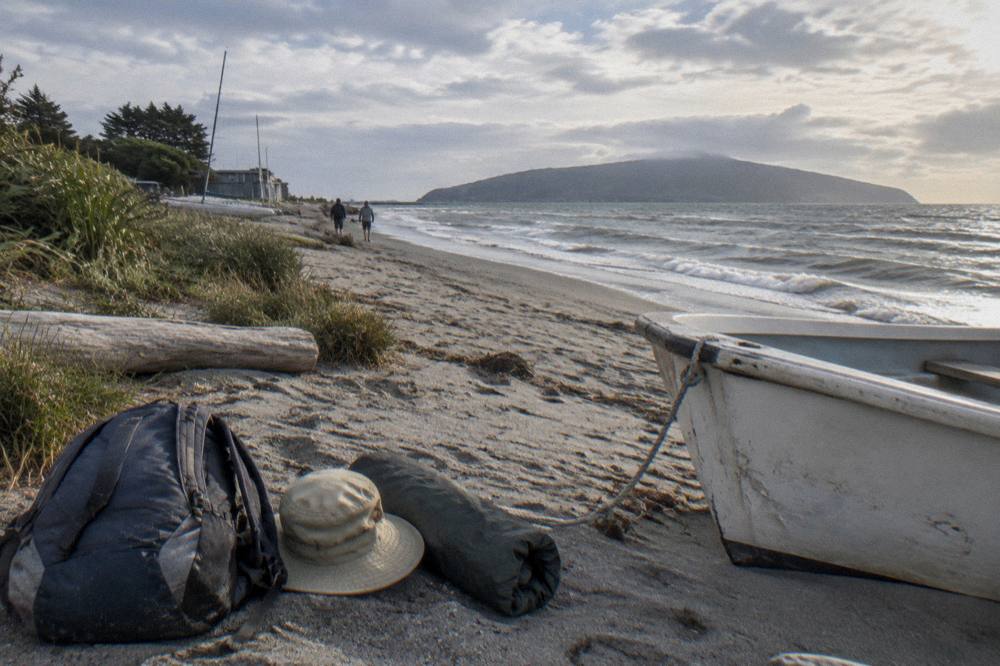
For walkers whose day is anchored in Wellington rather than Paraparaumu, the Wellington-return day tour, from $305 per person for 6 hours, folds the shuttle from Wellington accommodation into the trip, with a cooked lunch included. It is the same operator's product with the travel handled, not a rival tour, and it makes an island walk possible without a car.
What If The Weather Cancels Your Walking Day?
A weather cancellation on the Kapiti Island day tour or overnight gets another date or a full refund, and free cancellation up to 24 hours before the start applies to each island trip. The Wellington-return day tour carries no weather clause of its own, and the Nga Manu kiwi night visit instead holds a minimum-numbers clause, with a different date, a different experience or a refund if the minimum is not met.
The honest way to plan a summit day is with a mainland fallback in mind, and the region has strong ones. Zealandia, the Karori sanctuary, runs its three tours in all weather conditions, with the day tour from $40.23 per person rated 4.8 across 248 reviews, and its valley tracks need no boat at all. The Nga Manu reserve at Waikanae, a 14 ha remnant of coastal lowland swamp forest, hosts the kiwi night encounter, from $56.90 per person, where guests get an informational session and are escorted at dusk to a purpose-built kiwi habitat, quite distinct from the wild little spotted kiwi on Kapiti.
The boldest mainland alternative is the Seal Coast Safari, from $112.07 per person, rated 4.9 across 372 reviews, with pickup and drop-off direct from cruise ships, for 3 hours 30 minutes through Otari-Wilton's Bush and private farmland to Cape Terawhiti by 4WD. Like the island trips it needs good weather, with another date or a full refund when it cancels, and like every wildlife trip here it promises no sighting. The wider field is laid out in the comparison of Wellington wildlife tours.
Putting the walking options next to the tours that carry them shows the real decision: how much walking, on which coast, at what commitment.
| Option | From price (USD, per person) | Walking on offer | Weather terms |
|---|---|---|---|
| Kapiti Island Classic Guided Day Tour | $186.78, 5 hours total | Guided nature and history walk of about 1 hour | Good weather needed, another date or full refund |
| Overnight on Kapiti Island | $401.73 for 2 days | Two days around Waiorua plus a guided night walk | Good weather needed, another date or full refund |
| Wellington-return day tour | $305, 6 hours | Guided day with cooked lunch, shuttle from Wellington included | Not stated |
| Zealandia day tour | $40.23, 2 hours | Guided sanctuary walk in Karori | Operates in all weather, dress for it |
| Seal Coast Safari | $112.07, 3 hours 30 minutes | Short walks at Otari-Wilton's Bush and Cape Terawhiti | Good weather needed, another date or full refund |
Common Questions About Walking Up Kapiti Island
How Long Does It Take To Walk Up Kapiti Island?
Two hours one way to the 521 m summit at Tuteremoana on either track, per DOC: the Wilkinson Track at 3.8 km or the steeper Trig Track at 2 km, uphill only. Allow 4 hours for the round trip on the Wilkinson Track.
Is The Trig Track Or The Wilkinson Track The Better Summit Route?
The Wilkinson Track is longer at 3.8 km but steadier, with a picnic area and hihi feeding station a third of the way up. The Trig Track is shorter at 2 km but steeper and signposted for uphill traffic only, so many walkers use one track up and the other down.
Does The Guided Day Tour Climb To The Summit?
No. The Kapiti Island Classic Guided Day Tour includes a guided nature and history walk of about 1 hour, plus lunch at the lodge. The 2-hour summit tracks are separate from the tour's guided walk.
How Fit Do You Need To Be For The Kapiti Island Walks?
The operator points to reasonable fitness: tracks are unpaved, the landing is a stony beach by ramp, and the island is not wheelchair accessible. The overnight trip's booking page asks for moderate fitness.
Can You Walk From Rangatira To Waiorua On Kapiti Island?
No. The operator says it is not currently possible to walk between the two areas, so the summit tracks at Rangatira and the North End tracks near Waiorua cannot be joined into one walk.
Is There Water Or Food Available On Kapiti Island?
There is no shop and nowhere to buy food on the island. DOC says all water on the island is untreated and to bring your own; Rangatira has fresh drinking water at the visitor shelter while Waiorua's shelter does not.